Copenhagen by the Water: A Thoughtful First Cycling Day
Copenhagen makes the bicycle seem like an obvious way to see a city. That impression is useful, but a visitor’s relaxed sightseeing pace must fit around people who are simply going to work.
A different way to arrive
Copenhagen makes the bicycle seem like an obvious way to see a city. That impression is useful, but a visitor’s relaxed sightseeing pace must fit around people who are simply going to work. A satisfying first ride begins with an understanding of the cycle network, then connects waterfront spaces with a few deliberate stops. The goal is a comfortable rhythm beside the harbor, with enough time off the bicycle to appreciate what you have reached.
Learn the bicycle before the city
Before joining traffic, check the brakes, saddle height, lights, and how the bicycle locks. A machine that feels awkward on a quiet pavement will not become easier at a busy junction. Ask the rental provider about local road rules and current route advice, then test the bicycle where riding is permitted and there is room. Keep the first leg short. Confidence grows more quickly from an uneventful section than from following an ambitious route through unfamiliar intersections.
Choose a bicycle that fits and carry essentials in a secure bag; a loose item on a handlebar can distract you exactly when attention is needed.
Ride as part of the daily flow
Copenhagen’s cycling infrastructure is used by people with different speeds and purposes. Keep a predictable line, signal clearly according to local practice, and avoid sudden stops for photographs. Navigation should happen while stationary in a suitable space away from the cycle track. If an intersection feels confusing, dismount where appropriate and use a pedestrian crossing rather than improvising. Observe signs instead of assuming every paved strip is a bicycle route.
Let faster riders pass without swerving, keep headphones from reducing awareness, and take group conversations to a stop rather than across the moving lane.
Use the harbor as a connecting thread
The harbor gives a ride a clear visual structure, with bridges and waterfront districts connecting different aspects of the city. Water does not guarantee a continuous traffic-free path, so follow designated cycling routes and accept occasional inland diversions. Choose a few crossings rather than zigzagging over every available bridge. Looking back across the water from a new bank helps make sense of the city’s changing architecture. Wind can be stronger along exposed edges than within the street grid.
Arrange the ride as two or three manageable waterfront legs, and leave time at each end to lock the bicycle and explore on foot.
Walk through Nyhavn
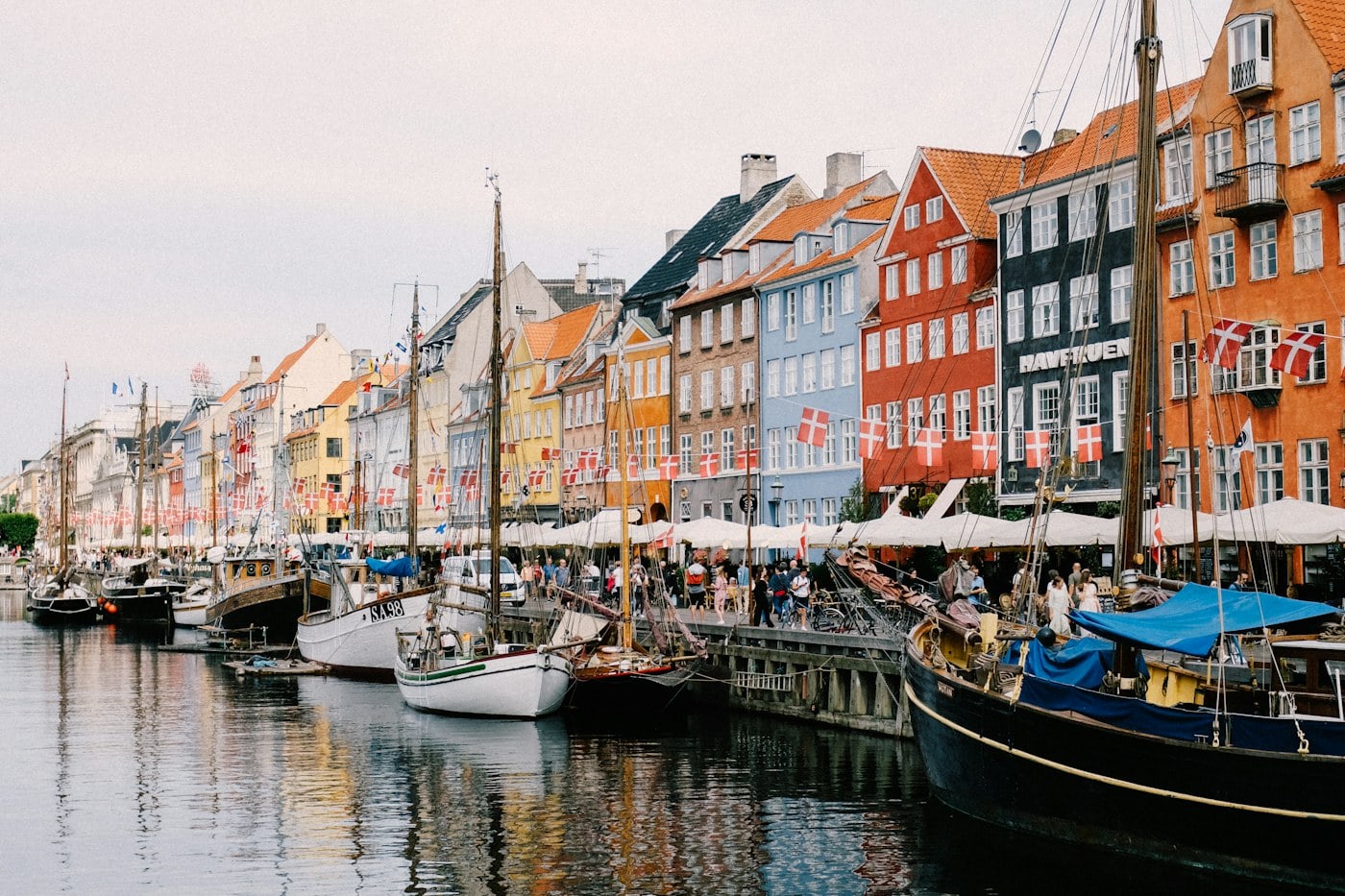
Nyhavn’s colorful harbor frontage attracts pedestrians who stop, change direction, and gather around tables. It is a place to slow down and follow local cycling signs rather than assume the sightseeing route remains rideable. Lock the bicycle in an authorized place and walk through the area if space is crowded. The interest extends beyond the familiar row of facades: notice boats, adjoining streets, and the changing angle of light on the water.
Keep the visit compact and continue into a neighboring street when the waterfront is busy; an early photograph is not worth a conflict with pedestrians.
Allow Christianshavn its own pace
Christianshavn’s canals and street pattern offer a different waterfront character. A small walking loop around the canals can complement the broader harbor ride. Study the relationship between houses, moored boats, bridges, and the narrower water spaces rather than looking only for a single landmark. Some bridge approaches and local streets require particular care around people walking. Keep access to homes and boats clear, and avoid leaning a bicycle against anything that is not intended for parking.
Pick a public canal-side stretch and a nearby food stop, using the bicycle for the connection rather than riding continuously through every interesting corner.
Choose a destination beyond the postcard
A longer leg toward newer waterfront development can reveal how Copenhagen combines housing, public space, and former industrial edges. Islands Brygge is one useful area to consider, depending on your starting point and the current route. The appeal is the changing city, not a promise that every stretch will be picturesque. Construction and temporary diversions can alter connections. A flexible route lets the visit remain pleasant when the direct way is unavailable.
Use a current local cycle map, follow temporary signs, and choose a return crossing before extending the ride into a district you have not yet explored.
Plan breaks around locking and weather
A bicycle makes movement easy but complicates a spontaneous indoor visit if secure parking is overlooked. Lock it as instructed by the provider and keep rental details accessible. A café break is also a useful moment to reassess wind, rain, and daylight. Carry a layer that works when standing still beside the water, not merely while pedaling. On a wet day, shorten the ride and combine it with a museum or another indoor stop.
Do not leave valuables with the bicycle; make the planned lunch stop the point where you decide whether to extend or turn back.
End before the ride becomes a chore
The best first cycling day finishes with enough energy to enjoy the neighborhood around the return point. Allow time to find the rental return location, resolve the lock or docking procedure, and confirm that the rental has ended. A waterfront sunset is a pleasant possibility, but it should not force a rushed journey in unfamiliar conditions. The city will still offer short walks after the bicycle is returned.
Keep a direct final leg in reserve, avoid racing a closing time, and remember that a shorter confident ride is an excellent introduction to Copenhagen.
Bridge choices that explain the harbor
The Inner Harbour Bridge connects the Nyhavn side of the central harbor with Christianshavn. It is useful because the crossing leads naturally from a familiar visitor area into a district with a different scale of water and streets. Study the approach and follow the designated cycling line; bridges concentrate people with different speeds and purposes. Avoid stopping on the moving route for a picture. A better plan is to cross, find an appropriate place to park, and look back from a public waterfront space. The connection then serves both navigation and observation without interrupting others.
Christianshavn’s smaller canals deserve a separate walking loop. From a suitable bicycle parking place, choose a canal segment and a bridge as a turning point. The Church of Our Saviour’s spiral spire provides a visible landmark, but climbing it is an independent visitor experience with its own current arrangements and physical demands. It does not need to be added to a cycling day. The street-level district already offers a strong contrast between narrow water spaces, houses, moored boats, and broader harbor edges. Keep private access and boat entrances clear, and do not assume that a waterside edge is a place intended for bicycle parking.
Farther along the harbor, Lille Langebro and the waterfront around Islands Brygge offer another way to read the city’s connections. Islands Brygge’s history as an industrial harbor area is useful context for its present public spaces and residential surroundings. A ride here can focus on how the waterfront has changed, rather than on reaching a single landmark. Public swimming facilities, where present, have their own rules and conditions; a casual cycling plan should not assume that entering the water is automatically appropriate. Choose a stopping place, look across the harbor, and decide whether the return should use the same crossing or a clearly mapped alternative. These bridges are everyday links, so the most enjoyable visitor route is one that fits comfortably into their ordinary use. A modest circuit with generous walking stops explains more than repeated crossings made solely to increase the distance.
A useful off-bicycle comparison is the broad harbor edge against a narrow Christianshavn canal. At the harbor, the view is shaped by larger buildings and longer crossings. Beside a canal, a short bridge and a row of houses can define the whole scene. Allow time for both scales without trying to photograph them while riding. Park legally, secure the bicycle as instructed, and make the observation on foot.
Build a first ride with an easy middle
A useful introductory ride has three different parts: a short settling-in leg, a longer waterfront connection, and a simple return. The first leg should establish whether the bicycle fits and whether navigation feels comfortable. Stop somewhere suitable before adjusting the saddle or checking the route. Do not make the first unfamiliar junction the place where the group discovers it has different ideas about the destination. Agree on where to regroup if separated, and keep the route visible to everyone who needs it rather than relying on one person’s memory.
Use the middle of the day for the harbor and a walking stop. Nyhavn or a canal-side section of Christianshavn can serve this purpose, provided the bicycle is parked properly and the walking route follows local signs. Being on foot changes what you notice: doorways, moored boats, shop windows, and the arrangement of tables become easier to appreciate. A seated lunch also provides a natural moment to review wind and weather. If the outward journey has already required more effort than expected, shorten the afternoon without feeling that the ride needs a dramatic destination.
The return should be deliberately uncomplicated. Choose a crossing and a final approach you understand, leave time for rental procedures, and confirm that any docking or return process has completed. Afterward, walk a little near the return point if you still want more of the city. This separates the pleasure of exploration from the responsibilities of operating and returning the bicycle. Copenhagen’s cycling appeal is partly practical: ordinary movement can be comfortable and efficient when riders are predictable. A visitor who respects that rhythm will often enjoy the harbor more than one who tries to turn every bridge into a photo stop. The measure of success is feeling oriented and at ease, not covering a particular distance.