Dalmatia by Ferry: Choosing Fewer Islands and Seeing More
The Dalmatian islands look close together from the mainland, but a satisfying island journey is built around actual connections rather than the shortest lines on a map. Ferry ports, old towns, and beaches may sit on different sides of an island.
A journey with room to notice
The Dalmatian islands look close together from the mainland, but a satisfying island journey is built around actual connections rather than the shortest lines on a map. Ferry ports, old towns, and beaches may sit on different sides of an island. Choosing fewer bases gives time to understand those relationships and makes the crossing itself a pleasure. A good route has room for a morning on the water and an afternoon with no onward departure.
Start with Split as a place
Split is both a major transport point and a city with an unusually close relationship between historic fabric and everyday life. Walk through the old center and the area of Diocletian’s Palace without reducing them to a waiting room for a ferry. Keep luggage and transport arrangements separate from the time you want for exploring. A relaxed mainland night can make the first crossing easier.
A mainland stay allows you to separate arrival fatigue from the first island decision. Use the time to locate the exact ferry terminal area, understand how long the approach takes with luggage, and check the current departure information. Then put those logistics aside and enjoy Split. In the old center, everyday businesses coexist with historic structures, so the visit should remain considerate rather than turning every passage into a photo opportunity. The city provides context for the islands, not merely a platform from which to leave them.
Read the exact ferry destination
A ticket to an island is not necessarily a ticket to its best-known old town. Distinguish passenger catamarans from car ferries and check the precise departure and arrival ports. On Hvar, for example, the relationship between Hvar Town and Stari Grad matters to a plan. Verify current operator information before reserving accommodation around an assumed connection.
Write the port names into the itinerary, not only the island names. The difference can affect a bus connection, a taxi journey, or the decision to carry a vehicle at all. If changing islands, verify that the desired route actually operates on the intended day and that its arrival point fits your accommodation. Do not assume neighboring islands have a direct connection. A route with one fewer island can be much stronger if it removes a fragile transfer and gives the remaining stays proper time.
Let Brač be more than one beach
Brač is often associated with Zlatni Rat near Bol, but the island also has inland settlements, stone-built towns, and a varied coastline. Choose whether your stay is centered on Bol or another base and understand how you will move from there. Trying to see the entire island between two sailings can turn a pleasant visit into a transport exercise.
On Brač, choose a day that does not require constant movement. From a suitable base, combine a local walk with one particular shore or town rather than trying to represent every part of the island. If you want to go inland, make that the main outing and learn what transport is available for the return. A celebrated beach can be one pleasant interval without defining the entire stay. The island’s built places and working landscapes provide a useful counterpoint to the most familiar coastal image.
Separate Hvar Town from the island
Hvar Town’s harbor and historic center offer a lively introduction, but they do not represent every part of Hvar. Stari Grad provides another perspective, and the agricultural landscape around it has a long history. Pick the atmosphere and distances that suit your stay. A quieter base can be a deliberate choice rather than a second-best option when the famous harbor is busy.
Accommodation choice affects the atmosphere of a Hvar visit as much as the island itself. Look at the immediate neighborhood and the practical route from the port. If staying in Stari Grad, take time to understand the town and the nearby cultivated landscape rather than treating the base only as a cheaper route to somewhere else. If staying in Hvar Town, allow room for a quiet morning walk. Different bases support different experiences; the aim is to choose consciously rather than follow the most recognizable name automatically.
Give Korčula a slower arrival
Korčula Town rewards a walk through its compact historic core and around its waterfront. Arriving with time to settle in is more useful than rushing immediately to another excursion. Check how the port connects to the place you are staying, especially when luggage is involved. Use the first evening to learn the town’s shape, then decide whether a longer island outing is worth adding.
Korčula Town’s compactness can encourage overplanning because everything appears close. Resist turning that into a reason to rush. Walk around the old core, find an appropriate place to sit, and let the relationship between streets and water become clear. If you add an outing elsewhere on the island, choose a specific purpose and understand the transport involved. A good island stay usually includes some time that would be difficult to describe as an attraction but is enjoyable precisely because nothing urgent needs to happen.
Make swimming a local decision
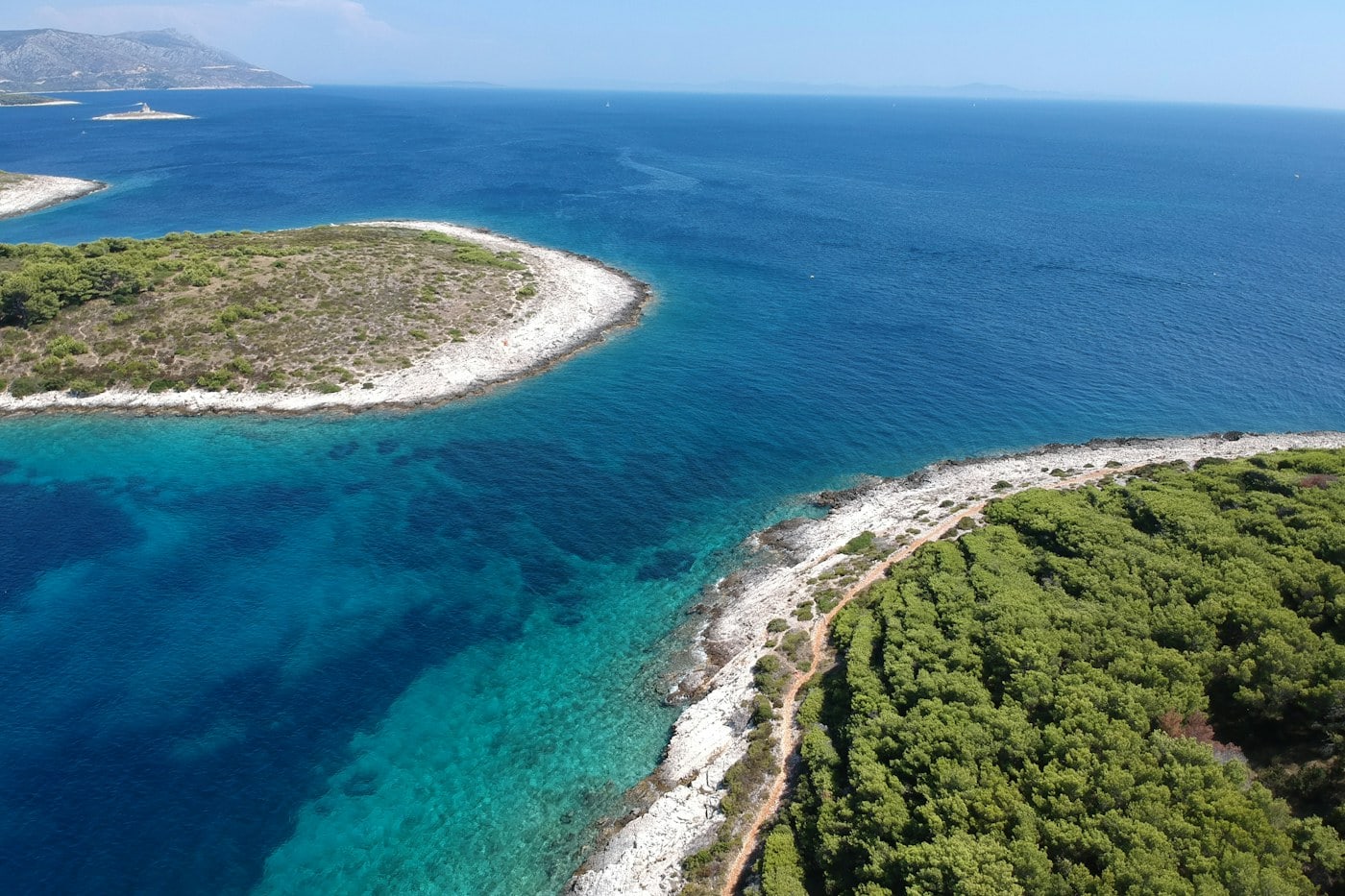
A shoreline seen from a ferry may be rocky, exposed, private, or difficult to reach. Ask about suitable public access near your base and follow posted advice. Bring footwear and belongings appropriate to the actual shore rather than assuming every stop is a sandy beach. Respect working quays and boat traffic; a harbor edge and a designated bathing place serve different purposes.
For an easy shore afternoon, ask about the kind of access rather than only the distance. Steps, uneven rock, or limited shade may change whether a place suits the group. Keep valuables and belongings organized without spreading across a narrow route used by others. Do not enter working port areas for a quieter swim or photograph. The distinction between public waterfront, boat access, and a suitable bathing area is important in small coastal towns, where all three may sit close together.
Carry less between bases
Island hopping becomes easier when luggage is manageable on steps, quays, and narrow streets. Pack for the sequence of stays rather than imagining every transfer has door-to-door assistance. Leave a margin between arrivals and fixed plans, and keep essentials accessible during the crossing. A small reduction in baggage can improve several days of travel without changing the route at all.
Choose luggage that you can comfortably manage through the least convenient part of the route. A short transfer can still involve steps, an uneven quay, or a walk through a pedestrian center. Keep documents, essential medication, and the information needed for arrival accessible without unpacking everything. Ask accommodation providers about the actual approach, rather than assuming a vehicle can reach the entrance. These practical details rarely appear in the most attractive island photographs, yet solving them can improve the experience of every transfer day.
Keep the final connection simple
The last island night should fit the onward journey, with current service information and a reasonable margin. Weather and operating changes are reasons to avoid a fragile chain of same-day assumptions. A final mainland stay can also be a pleasant conclusion: another walk through Split, an unrushed meal, and time to sort out departure without sacrificing an island morning to anxiety.
Read the last stage backward from the onward departure. Identify the connection you cannot afford to make uncertain, then give the island-to-mainland journey a sensible margin. A final mainland night can be part of the trip’s pleasure rather than a purely defensive choice. You might revisit a favorite part of Split or take a slow dinner after the last crossing. Ending with a straightforward sequence allows the final island morning to remain enjoyable instead of becoming an exercise in monitoring several linked departures.
A route that follows the actual connections
Begin planning with the current ferry network and the precise ports, then choose the islands that fit it. Split plus one island can be a complete short journey. Split plus two islands may work well with more time, provided each connection is practical and each stay has room beyond arrival and departure. Brač, Hvar, and Korčula should not be added simply because their names are familiar. Compare what each would contribute and choose a sequence that still looks comfortable when the transfer hours are included.
On the island, distinguish the base from the whole destination. Hvar Town and Stari Grad support different rhythms; a Brač stay centered on Bol differs from one elsewhere; Korčula Town can be enjoyed without treating every day as an outward excursion. Learn the local public routes, identify a suitable shore access, and let one or two outings provide contrast. Check the practical return before leaving the base. Island time becomes more generous when an ordinary afternoon does not require another transport decision.
Use the final mainland stage to simplify the end of the journey. Verify current services and allow an appropriate margin before any important onward connection. Another evening in Split can be a pleasure, especially once you know the streets and can choose a meal without arrival errands. The islands will remain distinct in memory when you have allowed each a recognizable rhythm: a ferry approach, an old-town walk, a local shore, and an evening with no departure to chase. That is a stronger outcome than a longer route held together by fragile timing.
A useful ferry note includes the port, the accommodation approach, and whether luggage must be carried through pedestrian streets. This matters particularly when a famous town name and a car-ferry arrival are not the same place. Solving the final connection before the crossing lets the first island hour become a welcome rather than a search for transport that was never included in the original plan.