A Market-Led Weekend in Lyon
Move between the Saône, neighborhood markets and traditional dining rooms with an appetite for the city beyond its menus.
Use the two rivers as your compass
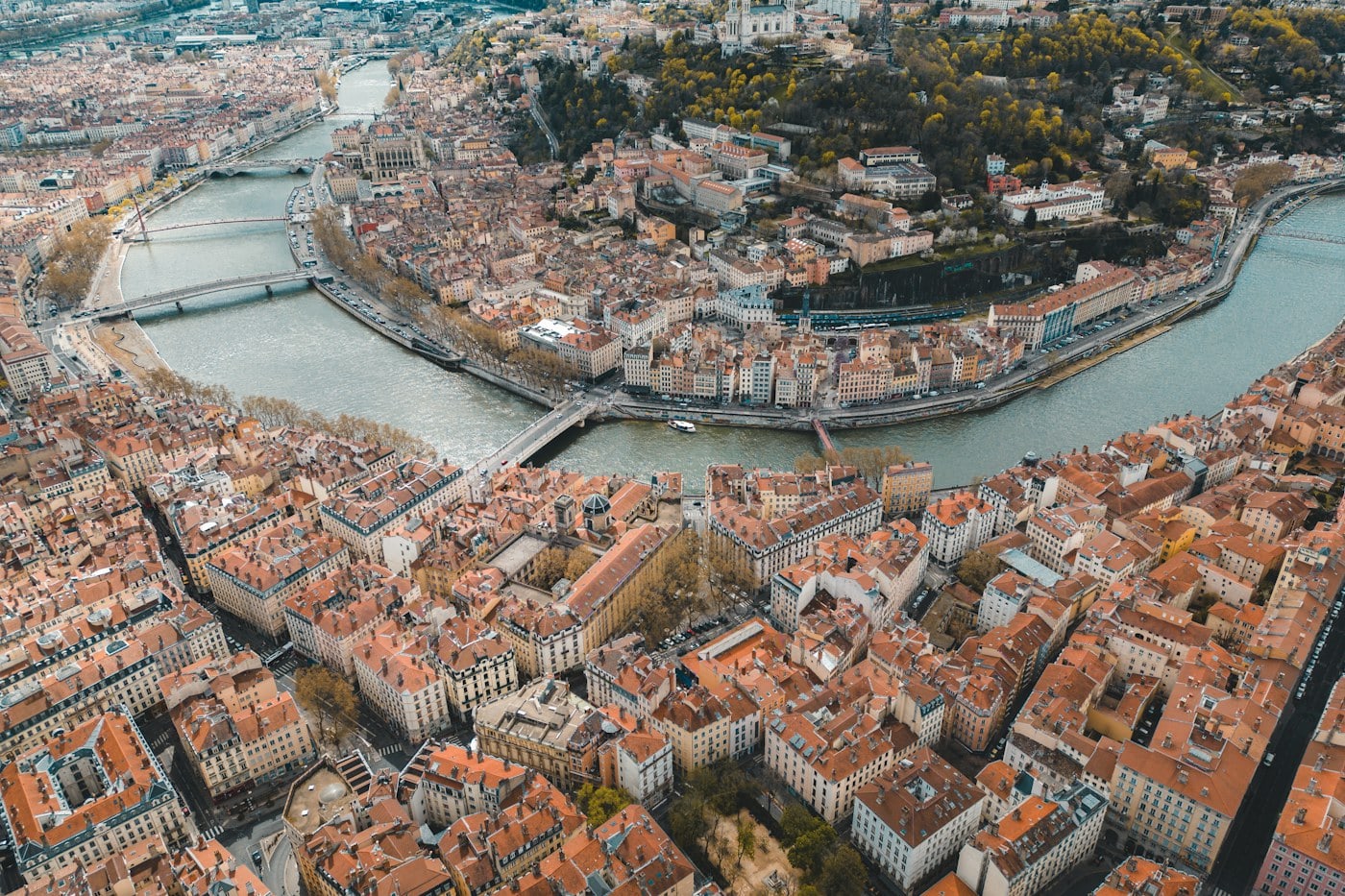
Lyon makes more sense once the Rhône and Saône become familiar. The Presqu’île lies between them; Vieux Lyon sits across the Saône beneath Fourvière, and Croix-Rousse rises to the north. These are distinct settings with different slopes and walking demands. Begin with a river crossing rather than an ambitious sequence of meals. From the bridges, the relationship between dense streets, riverbanks and hills becomes legible, helping you choose where to spend the rest of the weekend.
A useful first circuit crosses from the Presqu’île to Vieux Lyon by a pedestrian-friendly bridge, follows the lower streets briefly and returns along the Saône. It reveals how steeply the hill rises behind the old quarter. The Rhône side offers a broader urban scale, so save its longer banks for a separate walk rather than attempting both rivers immediately. Place Bellecour is a convenient reference point on the peninsula, while the area around Hôtel de Ville leads naturally toward the slopes of Croix-Rousse. These anchors are more useful for walking than a list of restaurants scattered across several districts. Choose a lunch area only after deciding which bank and hillside will occupy the morning.
Give the market a real morning
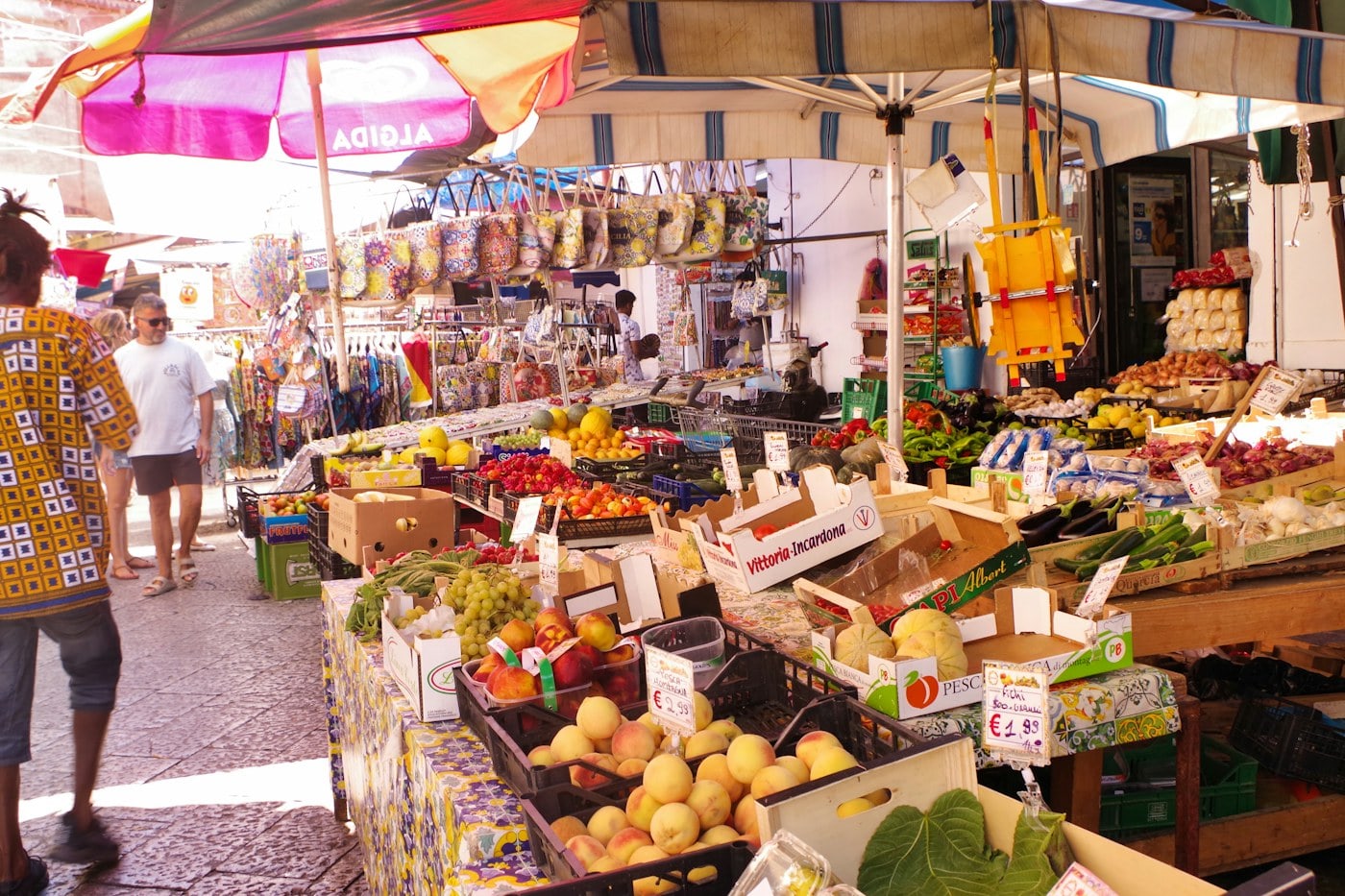
A market visit is richer when you arrive ready to look, ask and buy a modest amount. Quai Saint-Antoine is associated with a well-known riverside food market, but operating days and the mix of stalls need checking. Seasonal produce should lead your purchases, not an inflexible picnic menu written at home. Watch where a stall’s queue begins and avoid handling produce without permission. A cheese seller’s explanation can tell you more than a hurried photograph of a beautifully arranged counter.
Saint-Antoine’s position beside the Saône makes it possible to combine shopping with a short river walk, but carry only food you can use that day. A picnic might be bread, a piece of cheese and seasonal fruit rather than a collection of temperature-sensitive products. Ask a cheesemonger which cheese is ready to eat and how much makes sense for two people. If you have no refrigeration, say so before choosing. Outdoor stalls also make the season visible in a way that restaurant menus may not: the balance of fruit, greens and roots changes across the year. Plan to eat near the center instead of transporting delicate purchases through a full afternoon of sightseeing.
Know what you want from a bouchon
A traditional Lyonnais bouchon is a particular dining experience, often with close tables and a menu rooted in the region’s hearty cooking. Not every restaurant using the word offers the same quality or atmosphere. Read the actual menu and think honestly about your preferences, especially around offal and rich dishes. A meal can be traditional without being the right meal for you. Ask about portions and ingredients instead of ordering something merely because it appears in a guidebook.
Quenelles are often a useful starting point for diners unfamiliar with Lyonnais cooking, although sauces and preparations differ. Salade lyonnaise, with its combination of greens, egg and cured pork, is not necessarily the light option its name might imply. Other traditional dishes may involve tripe or other offal and deserve a direct question if the French menu is unclear. A restaurant displaying regional imagery is not automatically a careful kitchen; look for a coherent menu and transparent information. The experience is also social: close tables and a busy dining room can be appealing, but a quieter restaurant may suit a long conversation better. Choose the atmosphere as deliberately as the dish.
Let Les Halles explain the craft
Les Halles de Lyon Paul Bocuse offers a concentrated view of specialist food retail under one roof. It works differently from an outdoor produce market: the emphasis includes prepared foods, charcuterie, cheese, pastry and dining counters. Walk through once before buying. Compare what catches your attention, then return to a counter where you have a clear question or appetite. The hall is particularly useful when weather makes a long outdoor market morning less appealing.
Les Halles is inland from the Presqu’île, so treat it as a destination rather than a casual riverside detour. Its indoor layout allows a concentrated visit when rain makes an outdoor market less comfortable. Specialist counters are often better understood through one product: compare a cheese’s origin, ask about a pastry’s filling or look at the range of prepared charcuterie. Buying a little from several counters works only if you have a plan for eating it. Otherwise, choose a seated food stop within the hall and let the rest be observation. The covered setting also makes it easier to return to a counter after a complete walk around without feeling rushed by passing street traffic.
Climb Croix-Rousse for a different scale
Croix-Rousse brings the city’s silk-working history into view through its buildings, slopes and street pattern. The climb also changes the pace after time spent around the rivers. Do not treat every passage as a publicly accessible traboule: some entrances serve residents and access conditions vary. A neighborhood café, a market street and a slow descent can make a satisfying half-day without a tightly packed list of interiors. Comfortable shoes matter more here than a perfect route photograph.
The difference between the plateau and the pentes matters in Croix-Rousse. Reaching the upper neighborhood first and descending through the slopes can reduce repeated climbing, although the return to your accommodation still needs thought. The tall windows and substantial proportions of former workshop buildings connect to the area’s silk-working history. A museum or interpretation center can explain that work more clearly than treating every large window as picturesque architecture. Some traboules have published visitor access, but access can change and residents’ instructions take priority. Use streets as the reliable route and consider an open passage a bonus. This keeps the walk enjoyable even if a doorway shown in an older guide is closed.
Make room for Vieux Lyon beyond lunch
Renaissance courtyards and narrow streets are part of Vieux Lyon’s appeal, but their scale can disappear behind restaurant signs and groups. Explore in a quieter part of the day and look above eye level at the buildings. The district’s position below Fourvière explains its enclosed feeling. If you go up the hill, decide whether the view or the architectural visit matters most. Either can occupy more time than a crowded itinerary allows.
Saint-Jean provides a useful center for an old-town walk, with nearby streets opening into courtyards and small squares. Fourvière is a separate climb above, and a funicular can change the physical demands of the outing. Decide whether you want the basilica, the view or the nearby Roman remains to be the main reason for going up. Those interests lead to different amounts of time on the hill. Returning downhill on foot may sound easy but can involve steep surfaces and steps. If you are saving energy for an evening out, using transport in both directions is a reasonable choice. Leave the lower streets for a quieter wander rather than rushing through them as an approach corridor.
Use pastry as a pause
The pink praline has become a recognizable Lyonnais sweet, appearing in tarts and brioche. Its color is memorable, but texture and sweetness vary between preparations. A small portion with coffee makes a better comparison than buying a large selection you do not really want. Seek a place where you can sit or find a suitable public spot for a break. Pastry is not a reason to abandon the city’s streets; it is a reason to pause long enough to notice them.
Praline tart and praline brioche show how the same recognizable ingredient can produce very different results. The tart concentrates sweetness in a dense filling, while the brioche changes the balance through bread and scattered pieces of praline. Ask what has been baked recently and buy a portion suited to your appetite. A pâtisserie is also a useful place to notice other regional or seasonal items rather than assuming the pink specialty must always be the best choice. If taking food away, choose something that survives the rest of your walk. Delicate cream pastries and a warm afternoon are less compatible than a sturdy slice eaten shortly after purchase.
How to divide two full days
One sensible Lyon weekend pairs the Saône and Vieux Lyon on the first day, then gives Croix-Rousse and a chosen market or food hall to the second. Move the museum or major indoor visit to whichever day has less comfortable weather. Keep the most substantial restaurant meal away from your arrival night, when delays and tiredness can make a long dinner less appealing.
If you are traveling with different appetites, decide which meal matters most to share and keep the others adaptable. One person may want a market picnic while another prefers a seated lunch. The city offers enough variety that compromise does not have to mean a poor meal. A riverside meeting point can help companions separate for a short shopping or museum visit and reunite easily. Before the final day, check the route to your actual departure station: Lyon has more than one important rail hub, and familiarity with the center should not lead to assumptions about where your train leaves.
End with a flexible riverside evening
An evening beside the river offers a useful counterweight to a weekend of concentrated eating. Walk as far as feels pleasant, then choose a simple final meal. Lyon does not need to be reduced to a series of rich reservations. Its parks, bridges, bookshops and residential streets give context to the markets and kitchens. Leave with a short list of places you would return to, rather than the feeling that every local specialty had to be consumed before the train home.
A Saône-side ending works particularly well if you have spent the day on the hills or inside the food hall. Choose a section near a bridge that leads naturally back to your base. For a longer, flatter walk, parts of the Rhône banks offer a different atmosphere, with broader views and more space, but they should not be added automatically to an already substantial evening. Keep the final meal in the district where you intend to finish. Lyon’s rail departure points and the airport require different onward arrangements; check the actual station printed on your booking. An easy last walk is more enjoyable when luggage collection and the next journey have already been settled.