Lisbon on Foot: Hills, Trams, and the Streets Between Them
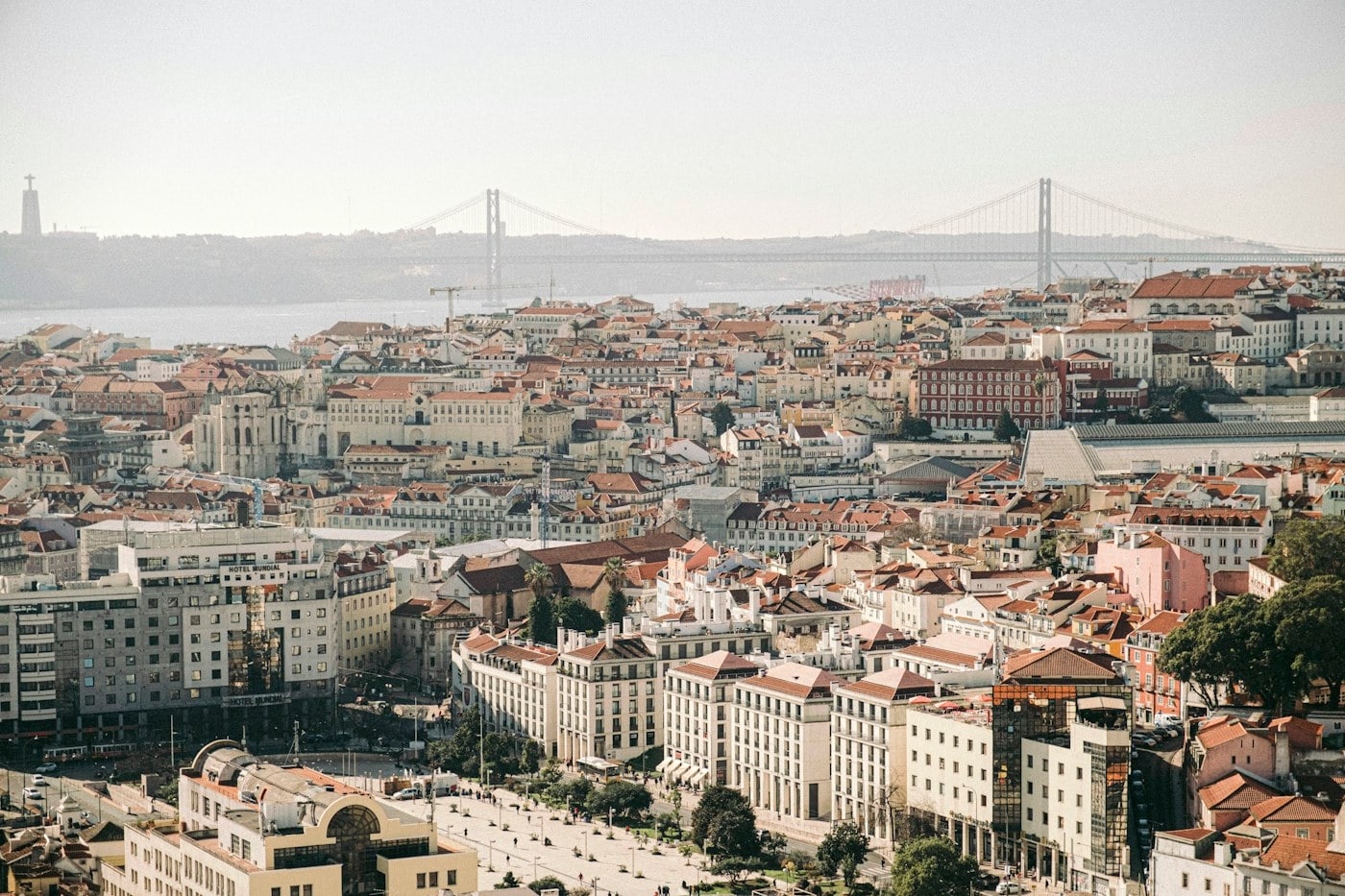
Lisbon is easier to enjoy when its hills become part of the plan instead of a surprise. The city turns toward the Tagus in terraces, stairways, tiled facades, and streets that seem to change direction just as a view appears.
A different way to arrive
Lisbon is easier to enjoy when its hills become part of the plan instead of a surprise. The city turns toward the Tagus in terraces, stairways, tiled facades, and streets that seem to change direction just as a view appears. Trams belong to this working landscape, but they are only one way to understand it. A good day combines a manageable climb, a district with room to wander, and an unhurried descent toward the water.
Start with the river’s level ground
The Tagus waterfront provides a useful introduction before climbing into the older neighborhoods. Around the central riverfront, broad spaces contrast with the smaller streets above. Look inland as well as across the water: the relationship between the flat lower city and the slopes becomes immediately clear. Wind, bright light, and exposed paving can make a short waterfront stretch feel more tiring than expected. Begin with a direction and a turning point rather than an open-ended march along the river.
Use the riverfront to establish bearings, then leave the exposed edge for shade before committing to a hill walk.
Read the Baixa grid
Baixa’s planned streets offer a different Lisbon from the winding lanes on the hills. The regularity makes navigation straightforward and helps explain the transition between the river and inland squares. Notice the proportions of the streets, the paving underfoot, and how larger public spaces interrupt the grid. This is a useful district for practical errands and an easy meal, but its central position can also mean crowds. Walk a parallel street when a main pedestrian route feels compressed.
Pair one square with a few side streets and resist making every shopfront a stop; the grid works best as a calm link between districts.
Approach Alfama with patience
Alfama is a district of steep connections and small-scale streets. It is tempting to navigate only by a viewpoint, yet the intervening lanes deserve attention. Stairs and uneven surfaces matter more than straight-line distances. Homes remain homes, and conversation, laundry, and open doors should not be treated as public performance. Choose a route that stays on clearly public ways and be ready to turn around without disappointment when a lane leads nowhere useful.
Wear footwear with a reliable grip and choose a shorter loop if carrying luggage or walking with someone who finds repeated steps difficult.
Treat a tram as transport
Lisbon’s historic trams are woven into the city’s identity, but popular services can be crowded. Decide whether your aim is an ordinary connection or the experience of a particular route; these are different decisions. Check current routes and tickets through the transport operator. Do not stand on tracks for a photograph, and give vehicles room at narrow corners. A tram seen moving through the streets can be as enjoyable as a ride with little room to look out.
Keep belongings secure in dense crowds and have a walking or alternative transit connection ready if boarding would make the day uncomfortable.
Choose one high view
A viewpoint is most rewarding when it reveals places you have already walked. Pick one elevated stop, learn which direction the river lies, and allow time to look beyond the foreground roofs. Several viewpoints in succession can become repetitive, while the climbs between them consume energy better spent in a neighborhood. Busy terraces are shared spaces rather than private photo platforms. Take a short turn at the railing and step back to let the next person see.
Make the viewpoint a pause before a downhill route, with drinking water and an indoor stop available nearby if conditions turn hot.
Make space for tiled streets and small shops
Lisbon’s tiles can be appreciated without converting the day into a checklist of famous facades. Observe how colors and patterns sit within the street, particularly beside stonework and painted plaster. Enter shops because something interests you, not solely to use them as a backdrop. For a food stop, consider whether you want a seated break or something brief at a counter. Keeping that decision simple often preserves the relaxed rhythm of a walk.
Photograph buildings from public space without blocking narrow pavements, and ask before taking close pictures inside shops or of staff.
Separate Belém from the hill walk
Belém lies farther west along the river and deserves its own allocation of time. Its scale, monuments, and open spaces create a different outing from wandering Alfama or the central hills. Trying to add it after a full morning of climbing can turn an attractive day into a sequence of connections. Choose one principal interior or landmark to explore and leave time for the surroundings. Official opening information should determine whether an interior is a realistic part of that visit.
Give Belém a separate half-day plan, and check the return connection before lingering along the waterfront.
Finish close to where you can return easily
The last hour of a Lisbon walk should simplify the day. A familiar square, a restaurant near a straightforward connection, or a final river view can be enough. Climbing one more hill merely because it looks close on the map is rarely a good measure of time well spent. Think about gradients when choosing accommodation too: a location near a station is not automatically an easy luggage walk. The city is enjoyable without conquering every slope.
Save the route back while you still have battery power and use a flatter final stretch to bring the day to a comfortable close.
Squares, viewpoints, and a western riverside contrast
Praça do Comércio is a useful lower-city reference because its open space makes Lisbon’s relationship with the Tagus immediately visible. From here, the Baixa streets provide a legible inland direction. Walk a selected street toward Rossio and notice how the regular plan contrasts with the hill districts. The purpose is not to cover every parallel street. A short sequence from river edge to square explains the lower city well and leaves time for a café or lunch. Keep an eye on crossings and on the uneven or polished sections of paving, especially after rain.
In Alfama, the viewpoints around Santa Luzia and Portas do Sol offer recognizable places from which to understand roofs and river together. Choose one as the principal pause rather than treating both as obligatory extended stops. The approach matters: a route with repeated stairs can feel very different from one following a longer street. Check the map at a comfortable place before climbing and do not follow a narrow residential entrance merely because it appears to point toward the view. At the terrace, take a considerate turn near the edge, then step back to look at the wider scene. A useful photograph can be made without holding the most popular position for a long time.
Belém creates a deliberate contrast. The Jerónimos Monastery, the Belém Tower setting, and the contemporary riverside architecture around MAAT belong to a broader western waterfront outing. They should not all be assumed to fit into a quick spare hour. Select the main interest and check its official visitor arrangements, including any closures or access changes, before setting out. A monastery interior asks for a different pace from a riverside architecture walk. The open spaces can also be exposed to sun and wind, so allow a sheltered pause. Return using a current connection that suits the actual endpoint rather than automatically walking back to the first arrival stop. Lisbon’s variety becomes clearer when Baixa’s grid, Alfama’s slopes, and Belém’s wider riverfront are understood as distinct experiences. A trip can include all three while giving each enough time on a separate part of the itinerary.
A route that works with Lisbon’s shape
One manageable central day begins on the lower ground near the river, continues through a small part of Baixa, and climbs toward a single viewpoint. The morning is then organized by the city’s geography rather than a list of addresses. After the climb, take a proper seated break before deciding whether to continue through another district. A downhill return can be pleasant, but it still requires attention on uneven paving. Anyone who finds steps difficult should compare the actual street route with available transport connections before committing to the climb.
Alfama can provide the main neighborhood experience for a different outing. Enter with a recognizable public destination in mind, follow a modest loop, and allow wrong turns to remain small inconveniences rather than invitations to investigate private spaces. A viewpoint is useful if it helps you understand the walk below, but another elevated terrace is not automatically a better use of the afternoon. Listen to the ordinary sounds of the streets and notice how the width of a lane affects movement. A group that spreads across a small passage can interrupt daily life even when everyone is trying to be considerate.
Belém is best treated as an alternative day’s focus. Select one principal visit after checking official information, include time for the open riverside setting, and use a current connection for the journey there and back. The contrast between Belém’s broader spaces and the central hills can become part of the trip’s appeal. Trying to combine both into a single long day tends to make the connections more memorable than the places. For accommodation and evening meals, think about the route home as carefully as the outward walk: the final uphill street matters more when the day has already been full. A thoughtful Lisbon itinerary respects both the city’s gradients and the amount of energy left to enjoy them.