Melbourne’s Laneways: Coffee, Arcades, and a Better Way to Wander
Melbourne’s central grid is easy to recognize, but the smaller spaces inside its blocks create a more varied walking day. Laneways, arcades, and short pedestrian connections bring food, street art, shops, and ordinary service activity close together.
A different way to arrive
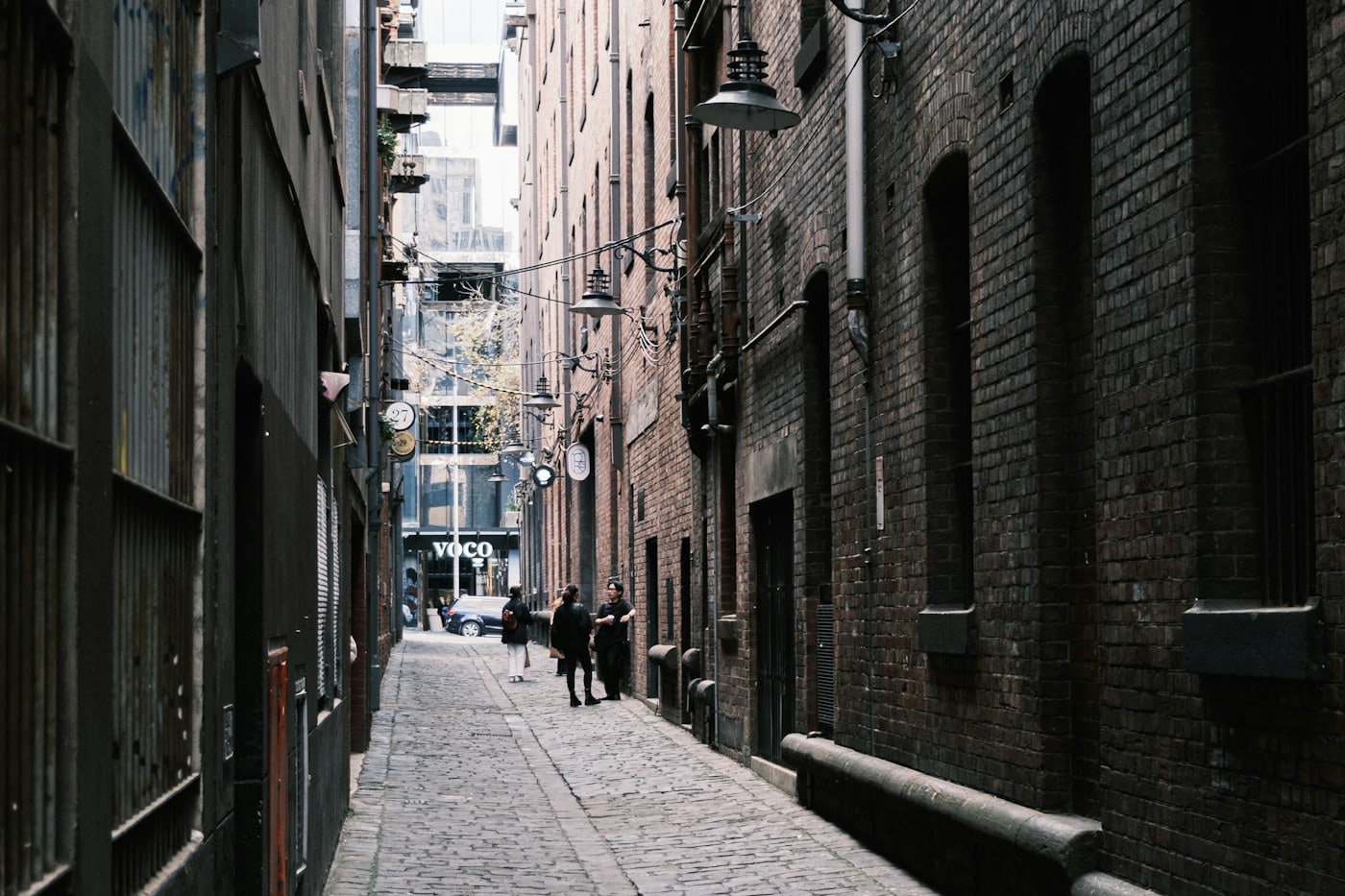
Melbourne’s central grid is easy to recognize, but the smaller spaces inside its blocks create a more varied walking day. Laneways, arcades, and short pedestrian connections bring food, street art, shops, and ordinary service activity close together. They are best explored with a light plan and a willingness to double back. Choose one section of the center, step away from the busiest thoroughfares, and let the walk develop around a few places you actually want to spend time.
Use the grid to make wandering easy
The central street grid provides a reliable frame for exploring smaller passages. Begin with two main streets you can recognize, then walk the lanes between them. A passage may lead to an arcade, another street, or a service area rather than a continuous scenic route. There is no failure in returning the way you came. Keep navigation checks to wider spaces so that doorways and narrow walking lines remain clear.
Save your starting point and a nearby tram stop, making it easy to end the loop whenever the weather or your energy changes.
Give coffee one proper stop
Melbourne’s coffee culture is enjoyable when a café is allowed to be more than a quick photograph. Choose a place with a menu and seating arrangement that suit you, whether that means a brief standing stop or a longer breakfast. Busy lanes can make queues awkward, so observe where customers are waiting before joining. A famous address is not the only valid choice. The best stop may simply be the one where the atmosphere feels comfortable.
Keep a second café in the same small area and avoid crossing the center repeatedly to pursue a sequence of drinks.
Look at street art as a changing surface
Street art in well-known lanes can change quickly. A photograph found online may not represent what is there today. That changing character is part of the interest, along with the relationship between painted surfaces, doorways, and the working lane. Do not touch fresh work or obstruct someone painting. If a space is crowded, make a short visit and continue rather than trying to manufacture an empty scene.
Watch for vehicles and service entrances, and treat close photographs of people as a separate request from photographing a public wall.
Slow down inside an arcade
Arcades offer a different scale and atmosphere from open laneways. Look at floor patterns, roof structures, shopfront proportions, and the way light enters. They are also commercial spaces with opening arrangements and rules, so follow signs and staff guidance. A short passage through can be rewarding without shopping, but do not block entrances to take pictures. Choose one or two arcades rather than treating each as interchangeable.
Pair an arcade visit with a nearby food stop so that the route remains compact and the architecture gets a little focused attention.
Notice the city’s working edges
Not every narrow street is a visitor attraction. Deliveries, loading areas, and staff entrances are part of the same urban fabric that makes the center lively. Recognizing these uses helps you move considerately and also reveals how the polished public city functions. A lane with bins and service doors is not a disappointing interruption; it is simply a different kind of street. Stay where walking is permitted and remain alert to reversing vehicles.
Avoid posing in driveways or loading bays, and step back to the main street when a narrow route is busy with service activity.
Add the river as a wider contrast
The Yarra provides a useful contrast to the compressed spaces of the central lanes. A short river walk opens the view and helps separate the morning from the afternoon. Choose a bridge or public landmark as a turning point rather than walking indefinitely along the bank. Shared paths need the same awareness as busy city pavements. Weather can feel different beside the water, especially when wind arrives.
Make the river an optional extension with a clear return connection, rather than a distant destination added after an already long walking loop.
Keep weather alternatives close
Melbourne’s weather encourages a flexible day. A light layer and a compact rain option can be useful, but the most practical preparation is a nearby indoor alternative. A gallery, museum, arcade, or seated meal can change the rhythm without sending you across the city. Check the chosen institution’s current visitor information. If conditions are unpleasant, reduce the number of outdoor lanes and give one indoor stop more time.
Organize alternatives by location, so that the decision is between neighboring options rather than an entirely new itinerary.
Finish with a neighborhood rather than a checklist
A successful laneway day leaves a sense of connections: which main streets frame the area, where a small café sits, and how an arcade opens onto another block. You do not need to remember every lane name. Return to a place you liked for a meal or a second look if it suits the route. Familiarity can be more rewarding than continually searching for something new.
Check the current tram or walking connection home and finish while you still have enough attention to enjoy the streets around it.
Specific places, different kinds of passage
Degraves Street and Centre Place are useful examples of how a narrow central space can become closely associated with cafés and pedestrian activity. They can be busy, and their appeal does not require a long stay in the most crowded section. Look at menus from a suitable place, choose one stop if it suits you, and keep through routes clear. The surrounding main streets provide easy escape and orientation points. A short visit can explain the compressed scale of Melbourne’s laneway dining without turning breakfast into a contest for a particular outdoor table.
The Block Arcade and Royal Arcade offer another kind of passage, with covered space and architectural detail that encourage a slower look upward and underfoot. They are commercial environments with their own opening arrangements, so plan accordingly and follow any photography guidance. Notice how the arcade connects the streets at either end rather than viewing it only as a decorative interior. A shop window, tiled floor, or roof structure can provide a focused observation. Avoid stopping directly in an entrance, and do not assume that every upper level or adjoining doorway is part of the public route.
Hosier Lane is a well-known street-art destination, but the surfaces change and no particular image should be expected to remain. Treat it as a place to look at a changing public visual culture while staying alert to the lane’s practical uses. Artists, deliveries, residents, and other visitors may all need space. From the central streets, Federation Square and the Yarra can provide a wider public setting for the next part of the walk. Choose a short riverside section and a bridge or landmark as a turning point. This sequence creates three distinct scales: a narrow food lane, a covered arcade, and an open riverside space. It is enough variety for a relaxed day, especially when a proper café break and an optional cultural visit are included. There is little benefit in adding every famous lane if doing so removes the time needed to enjoy the ones already reached.
Federation Square can serve as a practical place to reconsider the route before heading to the Yarra. Its open public setting differs sharply from the narrow lanes, making the change in urban scale easy to notice. Choose whether the river walk is a short final leg or the beginning of a separate outing, and identify the return crossing before continuing. A city map should guide the actual connection rather than an assumption that every waterfront path leads conveniently back. If the morning has already been full, a brief look across the water and a straightforward return can be enough to complete the day comfortably.
A compact loop through the center
Choose a central starting point that is easy to return to and mark two main streets as the edges of the morning’s walk. Within that small area, alternate an open laneway with an arcade and a café stop. This creates variety without requiring constant navigation. A passage that leads nowhere useful can simply be retraced. The grid makes such small experiments easy, provided you remain aware of private access and working spaces. Stop to check directions where the pavement is wide enough for others to pass, and keep the group together at crossings rather than stretching it through a narrow lane.
The café should be a real break. Decide whether you want breakfast, a light snack, or only a drink before joining a queue, then settle into the service style of the place. This is also the moment to choose the afternoon. If the weather is good and energy remains, a walk toward the Yarra can open the view after the compressed central streets. If conditions are poor, a nearby gallery or another indoor visit may make more sense. Check official visitor information for a cultural stop instead of assuming it will be open whenever the rain begins.
Street art can be included along the way without becoming a hunt for a particular image. Painted surfaces change, and the surrounding lane remains a place of movement and work. Look at the relationship between the artwork and its setting, then move on when the space becomes crowded. A final return through an arcade or familiar street can reveal details missed earlier. Repetition is useful in a city walk: the second pass often feels less like navigation and more like recognition. Keep the end of the loop close to a clear transport connection, leaving time for a meal or a relaxed stop near where you are staying. That is a satisfying Melbourne day even if several famous lanes remain unvisited.