Kerala’s Backwaters Beyond a Single Boat Ride
Plan a quieter backwater stay around village paths, waterways and carefully chosen accommodation rather than an overloaded excursion.
Understand the landscape before choosing a boat
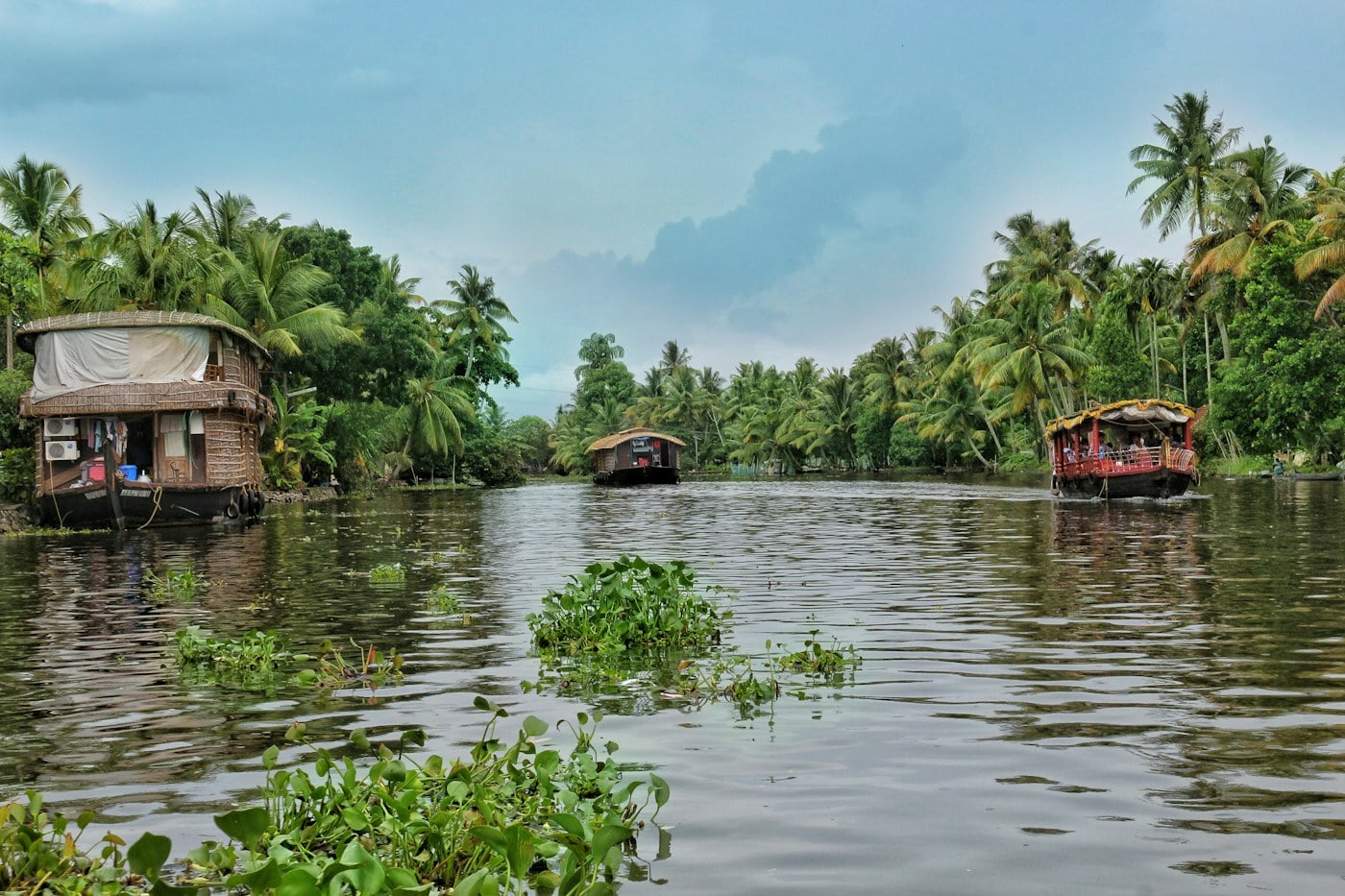
Kerala’s backwaters are a network of lakes, canals, rivers and inhabited shores, not one uniform attraction. Alappuzha and Kumarakom provide different bases around the Vembanad Lake region, while smaller waterways create a more intimate scale. Choose the kind of setting you want before comparing boat photographs. A broad lake crossing, a narrow canal journey and a village-side stay offer different experiences. None needs to be presented as the only authentic way to see the region.
Alappuzha and Kumarakom sit in different relationships to the wider lake system, so compare the actual address and route rather than treating them as interchangeable booking labels. Broad water can feel open and expansive, while narrower channels place the boat closer to houses and cultivated land. Ask where a proposed excursion travels and whether the route changes with conditions. A provider’s general promise of backwaters may cover quite different settings. Choose the landscape that interests you most. If you mainly want to see daily life along small waterways, a large vessel on open water may not deliver that experience, however attractive its cabin looks in photographs.
Consider a shore-based stay
A guesthouse beside a waterway can provide more freedom than an overnight boat for travelers who want walks, reading time and repeated contact with one place. Check whether the property has a practical public-road arrival or requires a water transfer. Ask about meals and the distance to nearby services. A quiet address can become inconvenient if every simple errand needs transport. The best choice matches your daily habits rather than an abstract ideal of remoteness.
A shore-based property may offer a garden, jetty or veranda, but clarify which spaces are available to guests and whether the view is directly from the room. Some properties depend on an arranged transfer for the final approach. Ask what happens if you arrive after dark or during heavy rain. Meals also matter: an isolated location is easier to enjoy when breakfast and dinner are dependable. If the property encourages walking, request a specific public route rather than assuming the bank continues beyond the gate. A quiet base should support a full day on site without requiring every activity to be purchased as a separate excursion.
Ask concrete questions about a houseboat
A houseboat can be a memorable part of a backwater trip, but expectations should be precise. Ask about the cruising route, mooring location, meal arrangements, noise and the amount of actual moving time. Photographs do not reveal how close other boats may be or what the surroundings feel like after dark. Compare operators on clear practical information rather than vague promises of seclusion. A day outing may suit you better than an overnight stay.
For a houseboat, the mooring arrangement can shape the evening as strongly as the cruising route shapes the day. Ask whether the boat will stop near other vessels or beside an inhabited shore, and what level of privacy to expect. Confirm which facilities operate while cruising and while moored, including any power-dependent equipment essential to you. The number and layout of bedrooms may matter when traveling with companions, as shared deck space is not the same as separate quiet space. Compare the plan with a shore stay plus a day boat before choosing. An overnight vessel is a particular style of accommodation, not an automatic requirement for understanding the backwaters.
Walk with awareness of daily life
Village paths beside canals may pass homes, gardens, small shops and places of worship. They can be narrow, uneven or interrupted by water crossings. Keep to clearly public routes and avoid assuming every waterside track is a through-path. The landscape is productive and inhabited, with boats used for work as well as tourism. Step aside when necessary, greet people naturally and ask before photographing close domestic scenes.
Canal-side paths can narrow beside homes or agricultural plots, and a bridge visible ahead does not guarantee a public through-route. Begin with a short walk recommended by your host and note a clear turning point. Boats carrying residents or supplies may use small landings that should remain unobstructed. If someone is washing equipment, tending a plot or carrying goods, give them room without treating the task as an invitation to photograph. The village landscape becomes more understandable when you notice its practical connections: paths to landings, houses facing water and the way cultivated ground relates to channels. Those details are visible without entering private space.
Let a meal explain the region
Food offers another way to understand the backwaters. Rice, coconut, vegetables and fish appear in many local preparations, but menus and household traditions vary. Ask what is seasonal and what a kitchen prepares well. A meal served on a banana leaf may have its own sequence and customs, so follow the host’s guidance rather than treating it as a photographic arrangement. Clear dietary questions are more useful than assumptions about the name of a dish.
A Kerala meal may bring together rice, several vegetable preparations, coconut-based elements and fish, but the composition depends on the kitchen and occasion. Do not assume a restaurant’s set meal represents every household or region. Ask what is being served that day and whether accompaniments are refilled or ordered separately. If a banana leaf is used, follow the host’s guidance about where food is placed and how the meal proceeds. Coconut, dairy, fish products and nuts may need specific ingredient questions. A cooking demonstration is worthwhile only if you want that format; an ordinary meal with a few clear explanations can provide plenty of insight without turning lunch into a scheduled lesson.
Choose a small-waterway outing thoughtfully
A smaller boat may enter waterways that larger vessels cannot, offering a different perspective on the relationship between houses and canals. The value depends on the operator and route, not simply the size of the craft. Confirm boarding arrangements, duration and whether the outing respects local access. Stay seated as directed and keep belongings secure. Quiet observation is usually more rewarding than expecting residents to perform activities for the camera.
A canoe or small motorboat may give access to a different scale of channel, but the operator’s judgment and permissions matter more than the promise of getting closer to village life. Ask how long you will be aboard and whether there is shade or a suitable boarding point. Keep cameras and phones secured so you do not need to stand or lean unexpectedly. If the route passes close to homes, observe without calling for attention. The outing can complement a broad-lake journey by showing how small waterways connect, but it should not duplicate the same stretch merely under a different label. A clear route description helps you choose.
Plan for weather and water conditions
Rain, heat and changing water conditions affect a backwater stay. Covered seating, workable indoor space and flexible transport can matter as much as the view. Ask accommodation providers how access and outings change during wet periods. Do not assume that a scenic photograph represents conditions throughout the year. Keep a quiet indoor alternative and avoid relying on a single water transfer for an important onward connection. Flexibility is part of traveling well in a waterside landscape.
A backwater property should explain how weather affects its own access, not only advertise the region’s seasonal appeal. Ask whether roads, paths or transfers become more difficult and whether boat outings are postponed under certain conditions. Covered common space makes a difference if several hours are spent indoors. If you need to leave for a fixed rail or air connection, arrange a practical margin and understand the fallback route. Do not plan the final morning around a long optional boat excursion. Conditions on the water and transport beyond it are separate variables, and a calm departure requires allowing for both rather than assuming the journey will match the previous day.
What to ask a host before booking
A useful inquiry to a backwater host includes the exact arrival method, meal availability, the view from the room and the nearest suitable public walking route. Ask what changes during wet weather and whether any advertised boat trip is private, shared or booked separately. These details explain the stay more clearly than a promise of tranquility. If you need to work or make calls, clarify connectivity rather than assuming the setting will support it.
For a short visit, choose either a shore-based stay with a boat outing or a carefully selected overnight boat. Combining several similar products can consume time without adding much understanding. A longer visit can include both, provided each offers a distinct setting. Keep the last night’s departure logistics simple if you have a major onward connection. Waterways encourage an unhurried pace, but transport commitments elsewhere still exist. The goal is to arrange them early enough that you can stop thinking about them while watching the ordinary life of the channel.
Stay long enough for repetition
The backwaters become more interesting when the same channel is seen at different hours. Morning movement, afternoon shade and evening light can reveal changes without requiring a new excursion. Two short walks along a familiar route may be more satisfying than a long transfer to another viewpoint. Leave time for an ordinary conversation, a book or a second meal at the same table. A slower stay works best when its simplicity is intentional.
Watching the same channel over several days reveals patterns a single cruise cannot: the direction of morning movement, the use of small landings and the way light alters the water beside the property. A second short walk can then have a purpose beyond covering distance. Compare one familiar section at another hour and return for a meal without adding transport. If you want more activity, choose one outing that changes the scale, such as a broader lake route after time beside a narrow channel. Avoid stacking several similar trips. The value of the longer stay lies in understanding one setting more clearly, not in purchasing a new water-based experience every day.