Colonia and the Uruguayan Countryside at an Easier Pace
Stay beyond the first old-town circuit and discover how the waterfront and surrounding countryside give Colonia a slower rhythm.
Stay long enough to see the town change
Colonia del Sacramento is often visited briefly, yet an overnight stay changes the experience of its historic streets. Daytime activity and quieter evening hours reveal different uses of the same small area. Choose accommodation that supports easy walking without assuming every room in an old building has the same access or comfort. Arrival and departure logistics deserve attention, particularly if you are connecting with a ferry or an onward bus.
Colonia’s terminal and historic quarter are separate practical points, even though the town is often described as compact. Check the route with luggage and whether your accommodation can store bags outside check-in hours. A late arrival changes what is sensible for the first evening; choose a nearby meal instead of trying to complete the old-town walk in fading light. An overnight stay allows you to return when you are rested. If you are crossing from another country, rely on the current carrier and official travel information for the journey rather than treating the ferry as a simple city shuttle. Keep the cultural itinerary separate from those departure formalities.
Walk the historic quarter without forcing a route
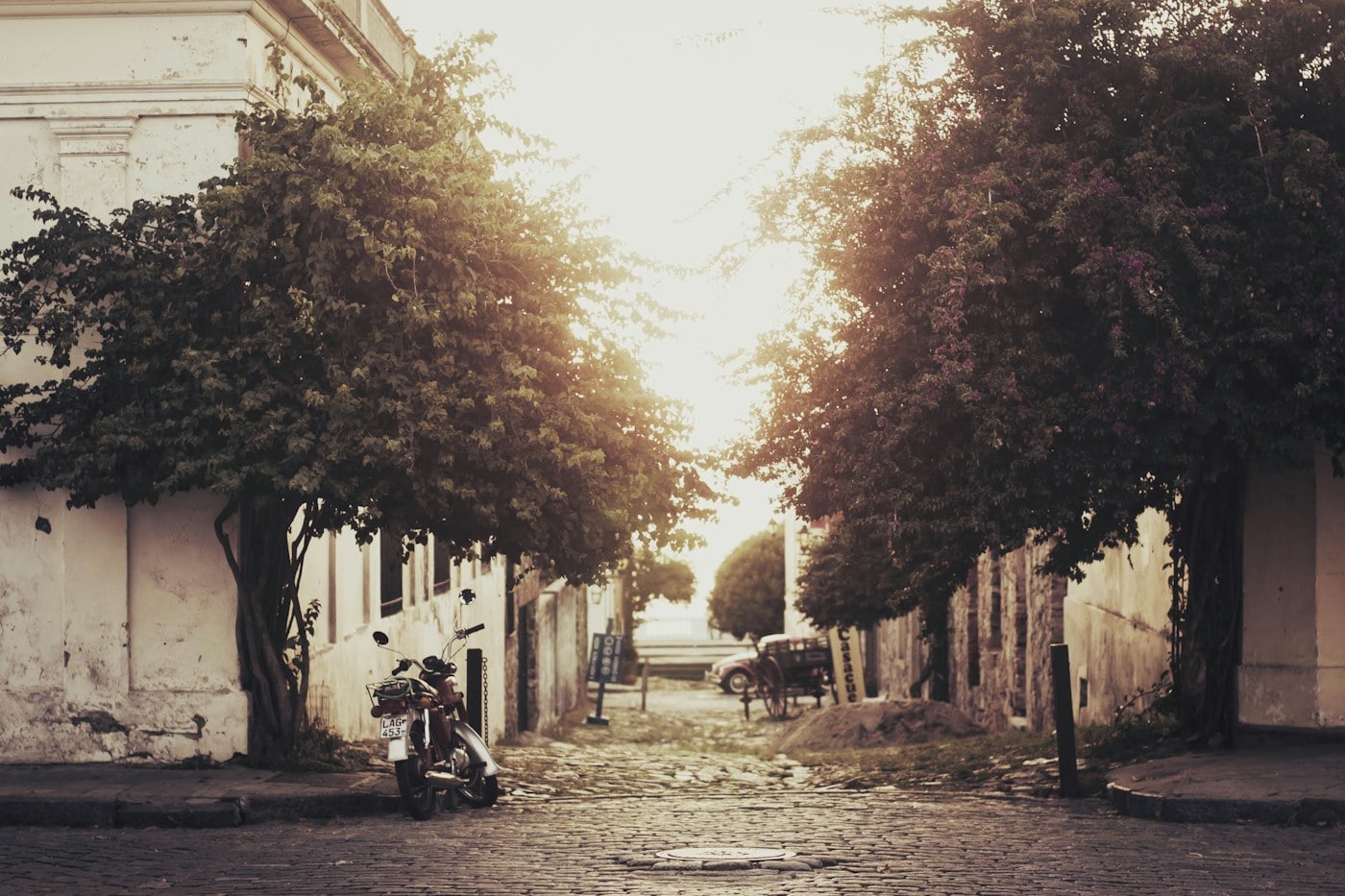
The historic quarter occupies a compact area near the Río de la Plata, with streets and buildings reflecting different periods of the town’s history. Uneven paving and changes of surface reward comfortable shoes and a measured pace. Use a few landmarks to orient yourself, then leave room for small deviations. The town’s appeal is not limited to a single picturesque street. Doorways, walls and the relationship with the water create the larger picture.
The lighthouse and nearby ruins provide recognizable anchors, while the streets around them invite a short loop toward the water. The paving can be uneven enough that a direct route is not always the most comfortable one. If mobility is a concern, ask locally about suitable surfaces rather than relying on a general claim that the historic quarter is walkable. Notice how older walls and later buildings share the same small area. The architectural mixture is part of the town’s character, not an inconsistency to edit out of photographs. A few well-chosen blocks can provide a satisfying introduction before lunch, leaving another section for the quieter hours of the following day.
Understand the water as an estuary
The broad water beside Colonia is the Río de la Plata, an estuary whose scale can feel almost sea-like. Its light and color change with weather, and the waterfront gives the town a sense of openness after narrow streets. Find an appropriate public place to pause without expecting every edge to be a beach or swimming area. The view is enough in itself. A long seated interval can be more rewarding than another rushed museum stop.
The Río de la Plata’s width creates a sense of horizon that contrasts with Colonia’s enclosed streets. Changes in wind and weather can alter both its color and the comfort of sitting beside it. Choose a public waterfront section with a straightforward return rather than following the edge indefinitely. If you want to spend longer outside, bring a layer and water instead of relying on the conditions at the start of the walk. The estuary is not a swimming recommendation in itself; follow current local guidance for any designated bathing area. For many visitors, the most rewarding use of the shore is simply a seated pause after the dense textures of the historic quarter.
Choose a small museum for context
Colonia’s small museums can help explain the town’s layered history, but their operating arrangements may change. Select an interior that interests you and check current official information rather than trying to enter every available building. A focused visit gives enough context to make a later street walk richer. Look for how objects, maps and architectural details connect with the quarter outside. The point is understanding a place, not completing a collection of tickets.
The Portuguese and Spanish strands of Colonia’s history become easier to understand when a museum visit is connected back to the streets. Look for maps or interpretation explaining changes in control and urban form rather than treating each object as an isolated relic. Small collections can have limited hours, so choose the one that fits your interests and is currently open. If a museum is closed, a well-informed guided walk may be an alternative, but compare the focus and format before booking. The aim is to understand why the quarter looks the way it does. One clear historical thread is more useful than accumulating disconnected dates from several rushed interiors.
Extend the stay toward the countryside
The countryside around Colonia offers a different scale, with agricultural land, smaller settlements and properties that may welcome overnight guests. Compare actual locations and what a stay includes. A rural address can mean limited independent transport and fewer meal choices. Ask whether activities are part of the property or require a separate journey. The experience works best when the accommodation itself offers the kind of day you want, rather than serving only as a scenic bed.
A countryside property may advertise horse-related activities, food or walks, but each should be clarified individually. Ask whether activities are included, supervised or dependent on advance arrangements. If you mainly want to rest, look for comfortable shared spaces and a meal plan rather than paying for a program you will not use. If independent walking matters, request a specific description of accessible routes. Agricultural land is not automatically open for wandering. A rural stay can complement Colonia by changing the scale from streets to fields, but it needs enough time to become more than a transfer, dinner and an early breakfast before leaving again.
Do not make every meal an event
Uruguayan food traditions include more than a single celebrated dish, and a relaxed stay allows variety between restaurants, cafés and simple meals. Read menus and ask about portions before ordering. A substantial lunch may make a lighter evening more comfortable. If you are staying rurally, communicate dietary preferences in advance. The pleasure comes from a meal that fits the day and setting, not from proving that you have eaten every regional specialty.
A parrilla meal can be substantial, and the cut, portion size and accompaniments should guide the order. Ask whether a dish is intended for sharing instead of assuming each person needs a separate large main course. Vegetables and non-meat options vary by establishment, so check a menu before committing if your group has different preferences. A café lunch or simple sandwich can balance a larger evening meal. In a countryside stay, tell the host about dietary requirements before arrival, since shopping and preparation may be planned in advance. A thoughtful food plan should make the day easier, not turn every meal into a negotiation after you have already sat down hungry.
Choose a modest outward excursion
A longer stay can support an outing toward another town or a stretch of countryside, but the excursion should have a clear purpose. Compare the full travel time with the experience you want: a historical visit, a walk or a particular meal. Driving through scenery is different from spending time in it. Avoid constructing a large loop simply because the map appears open. One destination with time to pause is enough for a satisfying day.
Colonia Suiza, also known as Nueva Helvecia, is one example of a distinct destination in the wider department, with its own settlement history and town setting. It should be chosen because that subject interests you, not merely because it fills a blank day. Check current access to any particular museum or cultural venue before traveling. The road journey and the time in town together determine whether the outing fits. If the main aim is countryside scenery, a rural stay or a shorter local drive may be more coherent. Avoid building a loop of several settlements unless you are content to spend much of the day moving rather than exploring on foot.
A simple town-and-country sequence
Begin with two nights in Colonia if your schedule allows, so arrival and departure do not frame the only full day. Then move to a countryside stay that offers a genuinely different setting. A single night at a remote property can involve a disproportionate amount of packing and transport. Give it enough time for the slow morning that probably attracted you in the first place.
Before reserving both parts, compare the practical route between them and the onward departure. A property’s description of being near Colonia may still imply a meaningful road journey. Ask how guests normally arrive and whether meals or transfers require notice. If the logistics are awkward, a longer town stay with one excursion may be the more relaxed option. There is no need to force a rural overnight into a short visit for the sake of variety. The best combination is the one in which both places have room to offer more than a bed and a hurried breakfast.
Let the final evening stay close
Colonia’s waterfront and historic streets can make a gentle final evening without another excursion. Return to a favorite view, notice the changing light and choose a meal nearby. The following day will be easier if departure documents, luggage and transport details are already settled. A slow visit should finish with the same ease it sought at the beginning. Leaving a few places unseen is a reasonable price for remembering the ones you visited clearly.
For the final evening, return to the part of the waterfront that felt most comfortable rather than searching for a more famous sunset angle. Cloud and wind may change the view, but the familiar route can still be pleasant. Choose dinner near your base and settle the next day’s terminal or station arrangements before going out. If your departure involves a ferry, follow the carrier’s current guidance about when to arrive and what procedures apply. Do not attach a last distant excursion to the same morning. Colonia rewards a light ending: a short walk, an unhurried breakfast and enough time to collect bags without retracing the whole town.