A Slower Stay Among the Salzkammergut Lakes
Choose one Austrian lake base, make a few thoughtful excursions and leave room for the changing weather and light.
Choose a lake for the stay you want
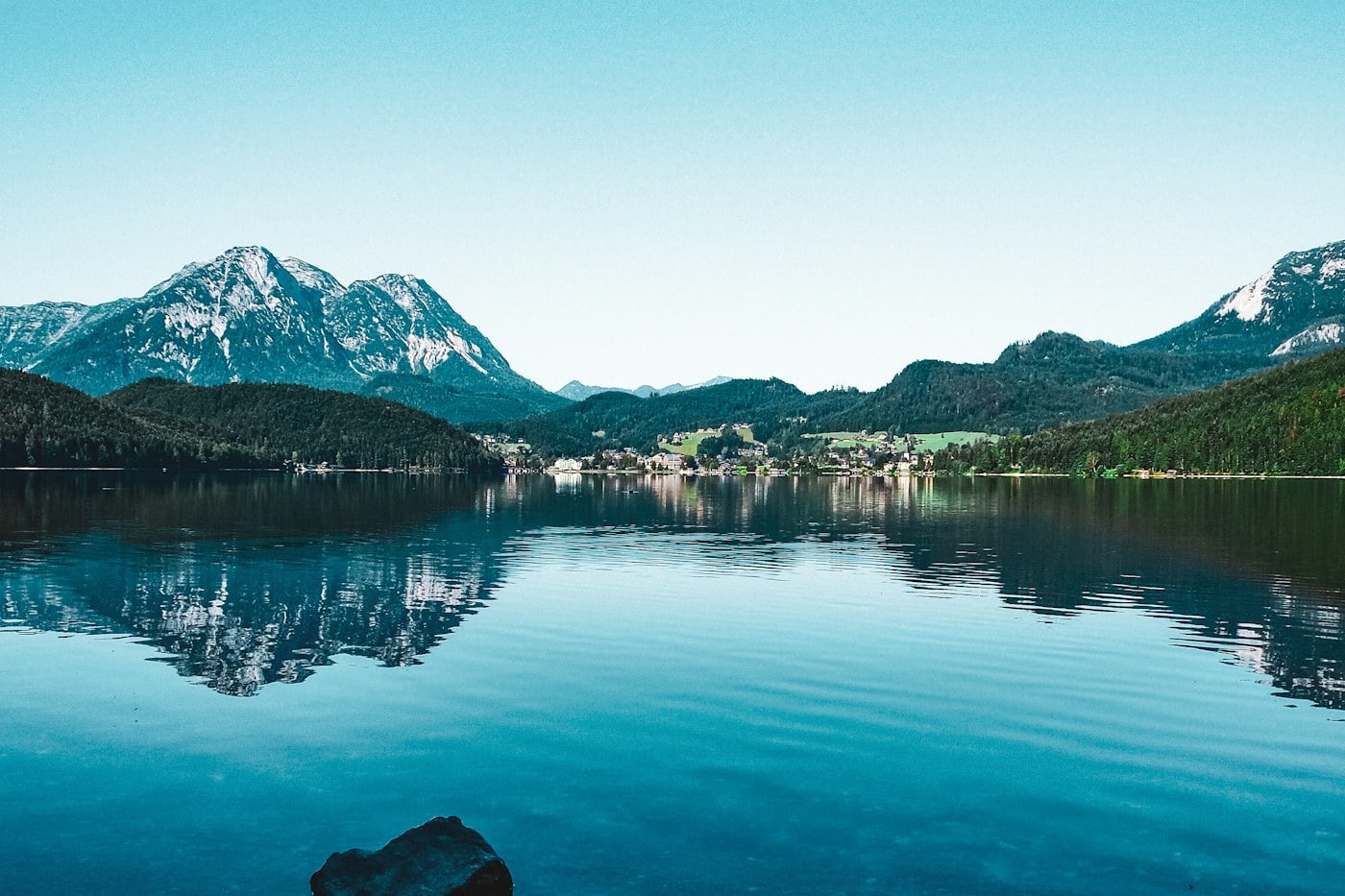
The Salzkammergut is a region of distinct lakes, towns and mountain settings rather than one destination with interchangeable bases. Wolfgangsee, Traunsee and Hallstätter See offer different arrangements of transport, shore access and settlement. Decide whether you want a town with services, a quieter village or easy rail connections. Then compare actual addresses. A room with a beautiful view can be less convenient if every meal and walk requires a complicated transfer.
A base on Wolfgangsee may support a different combination of village walks and boat journeys from one on Traunsee or Hallstätter See. Compare the transport connections you will actually use, especially if traveling without a car. A lakeside address can still be some distance from a station or the nearest regular bus. Ask about the final approach and whether meals are available within a comfortable walk. If staying in a small village, check what changes outside the busiest season. The best base is the one that supports an ordinary day easily: breakfast, a local walk, a place to sit and a simple dinner without a repeated transfer.
Make the shore your first outing
A lakeside walk is an easy way to understand the relationship between water, slopes and settlement. Not every shore has a continuous public path, so consult local route information before setting out. Begin with a clearly described section and turn back while the walk still feels pleasant. The changing angle of the mountains can make a short route feel varied. There is no need to circle an entire lake to appreciate its character.
Shore routes can alternate between public promenades, roads and sections where the water is not directly accessible. Consult a local walking map before assuming you can continue around a bend. A short out-and-back walk is often preferable to a supposed loop that introduces a long roadside stretch. Where a village has a promenade, use it to study the relationship between houses, landing places and mountain slopes. Pause before the route becomes tiring, especially if the return follows the same ground. If swimming is part of the plan, use a designated area and follow current local guidance. A scenic lake edge does not imply unrestricted access or suitable water conditions at every point.
Visit Hallstatt with realistic expectations
Hallstatt’s compact historic setting draws substantial visitor attention. If it is part of your itinerary, plan a focused visit and follow local guidance about access, photography and residential areas. The town should not be treated as a place emptied for the camera. Choose a few interests beyond the familiar lake view, such as an official historical venue or a slow architectural walk. A neighboring base may provide a quieter place to return afterward.
Hallstatt’s setting between steep ground and water leaves limited room for streets and visitor movement. That physical constraint helps explain why respectful use of public space matters. Stay on signed routes, avoid stopping in residential doorways and do not treat narrow steps as a viewing platform for a group. If visiting a museum or another official site, reserve enough time for that subject rather than adding it after a photo circuit. The journey to town also needs checking: rail, boat and road approaches involve different final stages. Choose the option that suits your base and mobility, and make the return clear before settling into the visit.
Use a boat journey as transport and perspective
Lake boats can connect places while offering a different sense of scale from the water. Routes and operating seasons vary, so check the current operator information. Choose a journey that supports your day rather than boarding merely to add another activity. A one-way trip followed by a walk may work well where the shore route is suitable. Keep an alternative in mind if weather affects the appeal or operation of the service.
A boat can make the lake’s scale clearer by separating the view from the road, but the service should be selected from a current route map. Some journeys are useful point-to-point connections, while others are primarily circular outings. Consider what you will do at the arrival point and whether the return is by boat, bus or a verified public path. Do not assume a shore walk will connect two piers simply because they look close across the water. Wind and weather can also change how pleasant an exposed deck feels. A shorter trip with time in one village may suit a relaxed day better than spending every available sailing aboard.
Keep mountain plans weather-aware
Mountain viewpoints and upland paths are part of the region’s appeal, but they deserve separate planning from a gentle lake stay. A transport-assisted ascent does not make every path at the top easy. Check current conditions, the route description and the last descent arrangement. Cloud can change what a viewpoint offers, while wind and rain can make exposed areas uncomfortable. A lower walk remains a worthwhile alternative rather than a consolation prize.
The Schafberg area above Wolfgangsee is one example of a mountain outing with a transport component, while other lakes have different upland access. Check the specific operator and route rather than carrying assumptions from one mountain to another. At higher ground, the path you choose may be steeper or more exposed than the arrival area suggests. If the principal purpose is the view, cloud can alter the value of the trip considerably. Keep a lower-level walk or cultural visit available instead. A clear day is an opportunity to use thoughtfully, not a reason to attempt several separate mountain excursions before the weather changes.
Give a town an ordinary afternoon
Bad Ischl and the region’s other towns offer a change from lake views: cafés, shops, parks and cultural interiors create a different kind of day. Choose a place that fits the transport network from your base. An afternoon of wandering and a seated break can be enough. Avoid turning every town into a sequence of named attractions. Its ordinary streets can explain how the wider region functions beyond its most photographed shores.
Bad Ischl offers a town-based contrast to the lake villages, with parks, cafés and historical venues that can anchor a less weather-dependent day. Choose one interior whose subject interests you and check its current visitor arrangements. A town visit does not need to include every building associated with its history. Leave time for the streets and a seated break, then return to the lake before the day becomes another transport circuit. If your base makes a different town easier, use that advantage rather than crossing the region for a name. The purpose is variety within a manageable distance, not a comprehensive survey of the Salzkammergut.
Let the accommodation be part of the visit
A multi-night stay is more satisfying when the room or common spaces support quiet time. Ask about balconies, shared seating and what is genuinely available to guests, rather than inferring from a photograph. On a wet afternoon, a comfortable place to read can matter more than an ambitious excursion. Buy a few practical provisions if self-catering is possible. Rest is easier to enjoy when it has been allowed for rather than treated as a failed sightseeing day.
When comparing accommodation, look beyond the balcony photograph to the spaces available in poor weather. A shared lounge, covered terrace or comfortable room can make a multi-night stay more flexible. Ask whether the advertised lake access is private, shared or reached across a road, and whether any facilities have seasonal limits. Meal arrangements also deserve attention in small villages. A beautiful evening view is less restful if dinner requires an unexpected drive. For self-catering, identify a shop on the arrival route and buy only what you can use. The accommodation should support the local days that justify staying in one place rather than merely storing luggage between excursions.
A four-night base rather than four lake stops
Four nights beside one lake can support a simple pattern: an arrival walk, a local day, a chosen excursion and a flexible weather day. The order should remain open until current conditions are clear. This gives a mountain outing more than one possible window and makes it less tempting to proceed when the view or route is unappealing. It also leaves room to enjoy the base itself.
Do not assume changing accommodation will provide a better view every day. Packing, checking in and finding food can consume the time you hoped to spend at the shore. If a second lake is easy to reach, visit it as a considered outing and return. If it is not, save it for another journey. A map covered with lake names can encourage constant movement, but the experience of watching one body of water change over several days is a different and equally worthwhile form of travel. Choose the form that matches the holiday you actually want.
End with one familiar view
Return to a lake view you have already seen and notice how light, cloud and water alter it. Repetition is one of the rewards of a longer stay. A final short walk can gather the trip together more effectively than a last distant attraction. Leave enough time to pack and make the onward journey comfortably. The region’s variety will remain, and a future visit can begin with another lake rather than a hurried attempt to finish them all.
A familiar shore section on the final day allows the landscape to remain the focus because the route no longer needs much navigation. Notice how the same ridge changes with light or cloud, then return for a meal near your base. If leaving by public transport, check the connection from the village as well as the main onward train. A short local bus or boat leg can be the part most vulnerable to a tight plan. Pack before the last walk and avoid a final remote viewpoint. One well-known view enjoyed without hurry is a stronger ending than another dramatic photograph obtained at the cost of a difficult departure.