Ljubljana Without a Car: A Weekend of Small Distances
Follow the river, climb for a view and give Slovenia’s compact capital the time usually reserved for a larger city.
Arrive with a walkable base
Ljubljana’s central river streets make a car-free stay appealing, but the exact location of accommodation still matters. Check the route from the station or airport connection, including the final distance with luggage. Pedestrian areas may affect where a vehicle can stop. A base just outside the busiest streets can offer a comfortable balance between quiet and convenience. Use arrival day to learn one reliable route into the center rather than mapping the entire city at once.
The main railway and bus arrival area lies outside the central riverside streets, so the final walk is worth checking with luggage. A property described as central may sit within a pedestrian area where vehicle drop-off is limited. Ask for the recommended approach rather than relying on a driver or map to solve the last few meters. Once settled, identify the route to Prešeren Square and the river; those references make later walks much easier. A quieter address a little beyond the core can work well if the route is simple and comfortable. Do not choose solely by the shortest map distance to the Triple Bridge, especially if stairs or luggage access matter.
Let the Ljubljanica set the rhythm
The Ljubljanica winds through the center with riverside terraces, bridges and small changes of level. A walk along one bank and back along the other is enough to establish the city’s shape. The Triple Bridge is a useful reference point, but the quieter stretches upstream deserve attention too. Stop where the river opens into a pleasant view rather than moving continuously between named landmarks. Small distances allow the day to remain flexible.
From the Triple Bridge, walking upstream changes the scale gradually as the busiest café stretch gives way to quieter edges. Cross at a convenient bridge and return along the other bank rather than repeating every step. The Dragon Bridge provides another recognizable reference downstream, but connecting every bridge is not necessary for a first outing. Pay attention to cyclists where routes are shared and keep café chairs or groups from pushing you into a traffic line. In unsettled weather, choose a section with several possible indoor pauses. The river gives the walk continuity, allowing you to shorten it without feeling that you have abandoned an essential sequence of sights.
Look closely at Plečnik’s city
Jože Plečnik’s architectural work is woven into Ljubljana rather than confined to a single monument. Bridges, market colonnades and public spaces show an interest in how people move and gather. Choose a few connected examples and look at their practical relationships with the street. Reading a little architectural context beforehand helps, but no specialist vocabulary is required to notice proportions, materials and framed views. The city itself becomes the exhibition.
The market colonnades are particularly useful for seeing how architecture organizes trade and public movement rather than only framing a view. Walk along them and compare the sheltered edge with the open spaces beside it. The Triple Bridge changes how pedestrians approach the square, so look back after crossing rather than photographing only from the familiar angle. If architectural history is a principal interest, Plečnik House offers a more concentrated subject for an interior visit, with its own current booking and opening arrangements. It belongs to a separate outing rather than a rushed addition to the market circuit. Decide whether you want a broad city walk or a deeper architectural study and allocate time accordingly.
Make the castle hill a separate outing
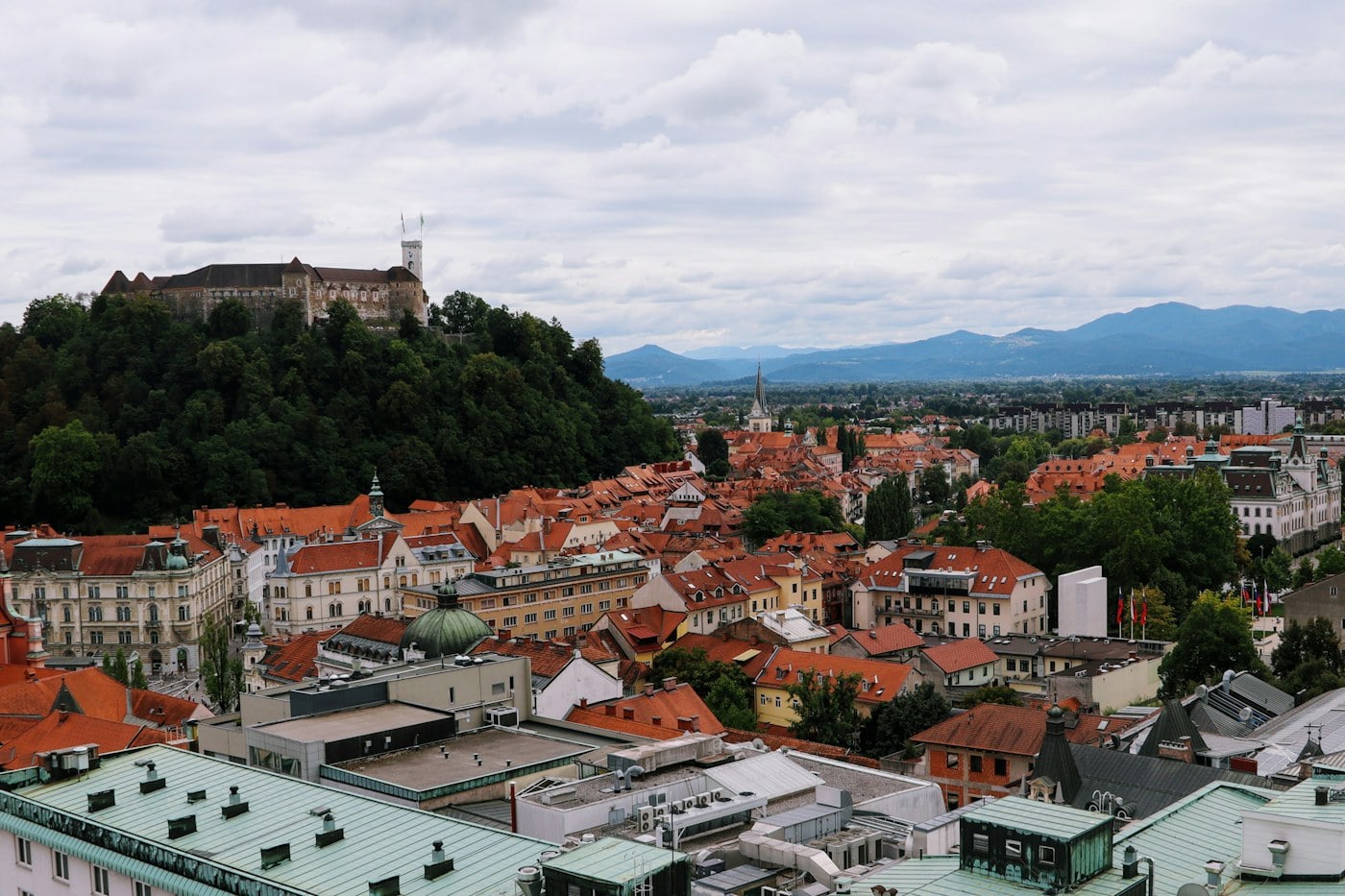
Ljubljana Castle rises above the old town and offers a clear view of the city’s layout. There are different ways to reach it, including walking routes and a funicular. Decide whether the climb is part of the pleasure or simply a transfer to the hilltop. Wear shoes suitable for the chosen path and adjust to the weather. A hill visit can fill a relaxed part of the day without needing a rushed tour of every exhibition.
The castle hill can be reached as a walk or a transport-assisted visit, and the choice changes the rest of the day. If you walk, use a clearly described public route and remember that rain can affect comfort on sloping surfaces. At the top, separate the pleasure of the outlook from any paid or timed interior experience. You may want only a view and a pause, or you may want the historical exhibitions; both are valid but need different time. A funicular journey can preserve energy for the lower town afterward. Check current operation directly rather than assuming the service will always be available at the hour you prefer.
Give the market a useful purpose
The central market area works best when approached as somewhere to buy food, not only somewhere to take photographs. Look for seasonal produce and consider a simple lunch assembled from a few purchases. Different parts of the market have different operating patterns, so confirm the current schedule. Leave room for residents and avoid blocking a stall while deciding what to photograph. A small conversation about an ingredient can be more rewarding than an elaborate food tour.
The market’s position near the river makes a simple food-focused morning easy to combine with architecture and a short walk. Buy a few items that fit one meal rather than treating every stall as a tasting obligation. If you have no kitchen, choose food that requires no preparation and ask where it is appropriate to eat. Some market businesses serve prepared dishes while others focus on ingredients, and the distinction affects ordering and seating. Seasonal produce gives a clearer sense of the visit’s timing than a generic list of national specialties. Keep purchases compact enough that you can continue comfortably, or plan a return to your accommodation before another major outing.
Walk into Tivoli for breathing space
Tivoli Park provides a change from the tight streets of the center. Its open spaces, paths and wooded edges invite a longer pause, but there is no obligation to turn the visit into a substantial hike. Choose a distance that feels comfortable and retain enough energy for the evening. The transition from urban streets to green space is part of the appeal. A bench and a book can be a perfectly good use of an afternoon.
Tivoli is close enough to the center to offer a genuine transition into green space without a complicated transfer. Choose between a gentle park circuit and a longer route toward wooded ground; they should not be treated as the same physical undertaking. A map or official local route description helps if you intend to extend beyond the main paths. Pairing the park with a nearby cultural interior can create a balanced day, but only if both interest you. There is no need to add a museum solely to make the afternoon appear productive. On a warm day, a shaded seat and an unhurried return through the city may be the more rewarding choice.
Keep excursions in proportion
Ljubljana is often used as a base for trips elsewhere in Slovenia, and a longer stay can support that well. During a short weekend, however, a distant excursion may consume the time needed to appreciate the city. Compare the full journey, including waiting and transfers, with what you would gain. If you do choose a trip, give it its own day. A destination should not become a hurried detour inserted between a market morning and a fixed dinner booking.
Lake Bled is a common addition to a Slovenia itinerary, but a day trip still requires current transport planning and time at both ends. Do not infer the total journey from the intercity travel leg alone: reaching the departure point and moving around the destination also matter. If the weekend is short, compare that full commitment with a day in Ljubljana’s parks and neighborhoods. If you choose the excursion, make it the main day rather than scheduling a demanding city evening afterward. Current weather and route conditions should guide any walking near a lake or in the surrounding hills. A photograph of a quiet viewpoint is not a guarantee of an easy, uncrowded outing.
One weekend, with no need to hurry
For two full days in Ljubljana, the first can follow the river, central architecture and market area, with the castle hill as the main outing. The second can begin more slowly and extend toward Tivoli or a chosen museum. Switch the order when weather or opening arrangements make that sensible. Keep meals close to the area you are already exploring instead of crossing the center for every recommendation.
A smaller city can make travelers feel that they ought to add a distant excursion to justify the stay. Resist that pressure if the weekend is already pleasant. Time for a second coffee, a longer park walk or a bookstore visit is part of the point. If you do leave the city, make the choice because the destination interests you, not because Ljubljana has failed to fill every hour. The train or bus journey should be part of a coherent day, with clear current information and enough time to return without abandoning the rest of your plans.
Leave with one familiar route
A car-free weekend succeeds when the center begins to feel familiar. Repeat a river walk, return to a café and notice how the same square changes between morning and evening. Ljubljana’s compactness allows that repetition without sacrificing variety. Keep the final morning simple and nearby. The memory of a place can be strengthened by knowing one route well rather than having hurried through every district without time to recognize it.
A final loop from the river to a familiar square can be completed without another major decision, which is valuable before departure. Revisit a café where you know the ordering routine or return to a shop with a specific purchase in mind. If leaving by bus or train, check the exact departure point and allow for luggage collection outside the pedestrian center. The city’s compact scale can encourage overconfidence about timing, especially when a last meal takes longer than expected. Keep the final route on the side of town that makes sense for onward travel. The result is a departure morning that still feels like part of the visit rather than a race back through it.