A Swiss Rail Journey with Room Between the Views
Build a rail itinerary around useful bases, ordinary trains and time to step away from the window.
Choose a route rather than a collection of famous trains
Switzerland’s rail network makes ambitious travel look deceptively easy. A map full of connections does not mean every scenic line belongs in one trip. Begin with two or three bases that create a coherent route, then decide which journeys connect them naturally. A lake town, a mountain valley and a city can provide variety without constant packing. The best itinerary leaves time at the destination, not only a sequence of attractive views from a seat.
A coherent route can use the rail network’s strengths without crossing the country repeatedly. For example, a lake base and a mountain-valley base provide different settings while allowing several local days. The final city can be selected for its onward connection rather than another dramatic landscape. Put the overnight stops on a calendar before choosing excursions. If every second morning begins with packing, reduce the number of bases. A train journey may be comfortable in itself, but accommodation check-out and check-in still divide the day. Two nights often provide only one full local day, a distinction that matters when mountain weather makes a particular outing uncertain.
Understand what a scenic journey requires
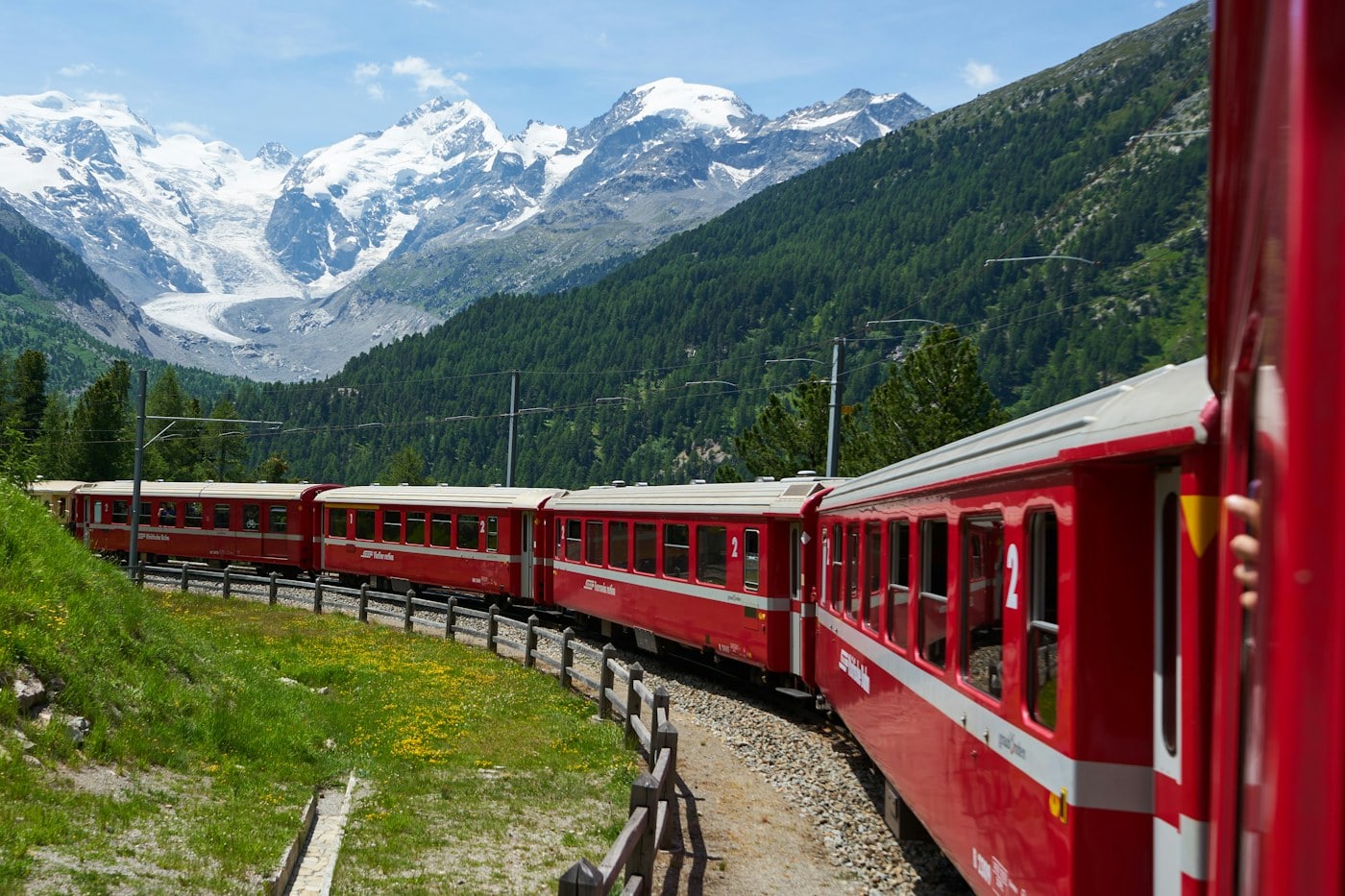
Some well-known scenic services have specific reservation arrangements, while ordinary trains may cover related routes in a different way. Check the current operator information rather than assuming every ticket works identically. Decide whether panoramic seating, commentary or a particular timetable matters to you. An ordinary service with a convenient stop can sometimes suit a slow journey better than a branded train that encourages staying aboard for the entire stretch.
A route described as panoramic may use the same landscape corridor as other services while offering a different carriage, reservation system or stopping pattern. Compare what you actually receive, not just the name. Some journeys are attractive because of the full through-route, while others work well with a break in a town along the way. Consult the operator’s current route map and ticket conditions. Check whether a pass covers the basic journey, whether a reservation is separate and whether mountain transport has different terms. This comparison should come after the itinerary is clear. Buying a transport product first can encourage unnecessary travel simply to make use of it.
Make Lucerne more than a transfer
Lucerne offers a useful combination of lake, old-town streets and rail connections. Give it time for a waterfront walk and an unhurried look at the town rather than arriving only to leave again. The Chapel Bridge is a recognizable landmark, but the streets and lake edge provide the larger setting. Weather can change the appeal of an excursion onto the water or up a mountain, so keep the base itself rewarding.
Lucerne’s station is close to the lake and central streets, which can make it a practical rail base, but the final accommodation walk still deserves checking. A route over uneven paving or uphill may feel different with luggage. Use the first full day for the lake edge, old town and one chosen interior rather than immediately leaving for a mountain excursion. If a boat journey is part of the plan, check the actual pier and current service information. A short trip can be enough to change the view. The city should remain a worthwhile place to spend a wet afternoon, not just a waiting room for the next clear summit forecast.
Use the Bernese Oberland selectively
The Bernese Oberland contains valleys, villages and mountain transport systems that can quickly fill a schedule. Choose one valley or base and learn how its local connections work. A visit to Lauterbrunnen, for example, should leave time to appreciate the valley floor rather than immediately stacking several uphill trips. Mountain weather may obscure the view you came for, and a lower walk can remain worthwhile. Check official route and lift information before setting out.
In the Lauterbrunnen area, valley-floor walking and journeys toward higher villages offer distinct levels of activity. Do not assume that a village reached by mountain transport is a quick extra stop after a substantial walk. Each leg involves waiting, orientation and often additional walking. Pick one principal direction and understand the return route. A base in the valley may make some outings convenient while a higher base changes luggage access and evening arrangements. Compare those practical differences before booking. The scenery is not the only factor: access to meals, the effort of arrival and the flexibility to change plans can determine how relaxed the stay feels.
Let a long journey have a pause
Rail travel is easier when a moving day includes a genuine break. Choose a station where luggage can be managed and where a short town walk or lunch is practical. The stop should not require a complicated detour. A platform snack consumed while watching the departure board is different from an hour at a table. Breaking the day also reduces the feeling that every landscape must be photographed before it disappears around the next bend.
A pause in a town along the route should be chosen for its station layout and practical access, not only for its appearance in a guide. Check whether luggage storage is available and whether the walk into town fits the time you have. If the connection is fixed, leave enough margin to return without rushing. A modest lunch and a short circuit can be more comfortable than an attempt to add another major attraction. Keep essential items with you when storing bags, and confirm how storage is paid for or accessed. The break works best when it simplifies the day rather than introducing another series of deadlines between trains.
Do not chase clear skies across the whole country
It is tempting to rearrange an entire trip when a mountain forecast looks disappointing. Small changes can help, but constant movement may create more stress than the weather itself. Give each base enough time for conditions to vary and keep an indoor or lowland option. A museum, lakeside walk or neighborhood meal can make a meaningful day. The journey should remain enjoyable even when the highest summit is hidden in cloud.
A mountain base with several nights offers more than one possible window for clear views. Use that flexibility locally rather than moving to a distant region whenever the forecast changes. Lower paths, lakeside areas and museums can give a different kind of day while the weather passes. Ask the local tourist office or transport operator about current conditions for a specific route. A general forecast for a nearby town does not describe every higher path. If the planned excursion is mainly about a view, be honest about whether cloud will change its value for you. Save the effort for a better window and choose something that suits the conditions now.
Pack for platforms as well as scenery
A rail itinerary asks you to move bags through stations, onto trains and along streets. Manageable luggage improves the whole experience. Keep tickets, water and a light layer accessible without unpacking everything. Leave space for other passengers and use designated storage appropriately. If a connection is short, understand the station layout before arrival. There is little pleasure in a beautiful route when every transfer becomes a struggle with oversized bags.
At stations, identify the platform from the current departure information and allow for lifts or underpasses if needed. Do not build every connection around the minimum time shown by a planner when your luggage or mobility makes that uncomfortable. Keep a small day bag with water, a layer and travel details so the main bag can remain stowed. On board, use designated storage and avoid blocking a seat or aisle with luggage. A window seat is pleasant, but ease of movement may matter more on a journey with several transfers. Packing for the actual handling of bags often improves the trip more than adding equipment for every possible mountain outing.
An example of a route with fewer moves
An illustrative rail itinerary might combine Lucerne, a Bernese Oberland base and a final city with a useful onward connection. The exact order depends on where you arrive and depart. Two or three nights in each base will feel different from the same number of nights distributed among many towns. Before buying tickets, test the route against a calendar and include the time needed to check out, reach the station and find the next accommodation.
Avoid judging value only by how much track a pass allows you to cover. A product that encourages unnecessary movement may work against the holiday you want. Compare current ticket conditions after the route is clear, and include any reservations or separate transport in the calculation. Companions with different interests can share a base while choosing separate afternoon activities. One can visit a museum while another takes a longer walk, then reunite for dinner without another hotel move. This flexibility is one of the strongest arguments for a rail trip with fewer overnight stops.
End somewhere that makes departure easy
The final base should support a calm onward journey. A city with useful airport or international rail links can provide a satisfying last day of museums, cafés and walking. Avoid leaving a remote valley at the latest possible moment for a major departure. The final night need not be the most dramatic view of the trip. It can instead be the place where you look back at the route with enough energy left to enjoy dinner.
Zurich, Geneva or another well-connected city may make sense for the final night, depending on your onward journey. Choose the city that serves the route rather than adding a long detour for a famous name. A final urban day can include a museum, a short waterfront walk or a neighborhood meal, providing contrast to the mountain portion. Check the exact departure station or airport connection and current service notices. If your major departure is early, proximity to a reliable link may matter more than a view from the room. The last night should protect the journey you have already enjoyed, with enough time to pack and leave without a complicated dawn transfer.