Northern Portugal: The Case for Staying in One Village
Choose a village base with care, then explore the landscape through modest walks, local meals and days with fewer transfers.
Choose a region before choosing a cottage
Northern Portugal contains very different landscapes: the green Minho, the terraces of the Douro and the uplands toward Trás-os-Montes do not offer the same kind of stay. An attractive stone house cannot tell you which landscape will suit your interests. Decide whether you want river walks, agricultural scenery or mountain villages. Then compare bases within that setting. A coherent area makes daily outings easier and reduces time spent crossing between places that only appear close on a small map.
Minho’s greener small-scale agricultural landscape invites a different itinerary from the Douro’s steep terraces or the more open uplands farther east. Decide whether the base should support easy village walking, river views or access to a protected mountain area. Then inspect the actual road network. A property can be close to a destination on the map yet separated by a river crossing or winding route. If traveling without a car, start with transport connections rather than a romantic image of isolation. A village near a workable bus or rail link may offer a more independent stay than a remote cottage that requires arranging every outward journey.
Check the ordinary conveniences
A village stay becomes more comfortable when practical needs are understood in advance. Ask where you can buy groceries, whether meals are available nearby and how the property is reached with luggage. A café marked on a map may not serve dinner, and a lovely isolated address can require planning for every purchase. These details are not obstacles to a quiet stay; they are what allow it to remain quiet once you arrive.
Ask whether the nearest food business is a grocery shop, a café or a full restaurant; those categories do not substitute for one another. A café may be useful for breakfast but not solve dinner. If self-catering, confirm cooking equipment and where the main grocery purchase can be made on the arrival route. Rural roads and village entrances may be narrow, so request the recommended approach rather than following an automated shortcut. Parking may also be separate from the door. Understanding these details allows you to arrive with the right provisions and carry luggage once, instead of spending the first evening retracing a drive for basic supplies.
Walk the village before taking an excursion
The first useful outing may be the shortest: a walk from your door to the square, church, water source or edge of cultivated land. Notice gradients and surfaces, and establish where public space gives way to private plots. A village is not a museum without boundaries. Ask before entering courtyards or photographing people at close range. Returning along the same route helps the place become familiar and makes later conversations more natural.
A church square, communal washing place or stone bridge can help explain a village’s organization, but only where the route is public and appropriate to visit. Agricultural tracks may serve active work rather than leisure walking. Ask which paths continue through and which end at private land. If you encounter livestock or working machinery, give space and follow local instructions. Photographs of stone houses often hide the gradient and surface underfoot, so begin with a modest circuit. A repeated local route becomes useful for noticing seasonal crops, water channels and the relationship between homes and fields without needing a formal attraction at the end.
Use the Douro as a landscape, not only a backdrop
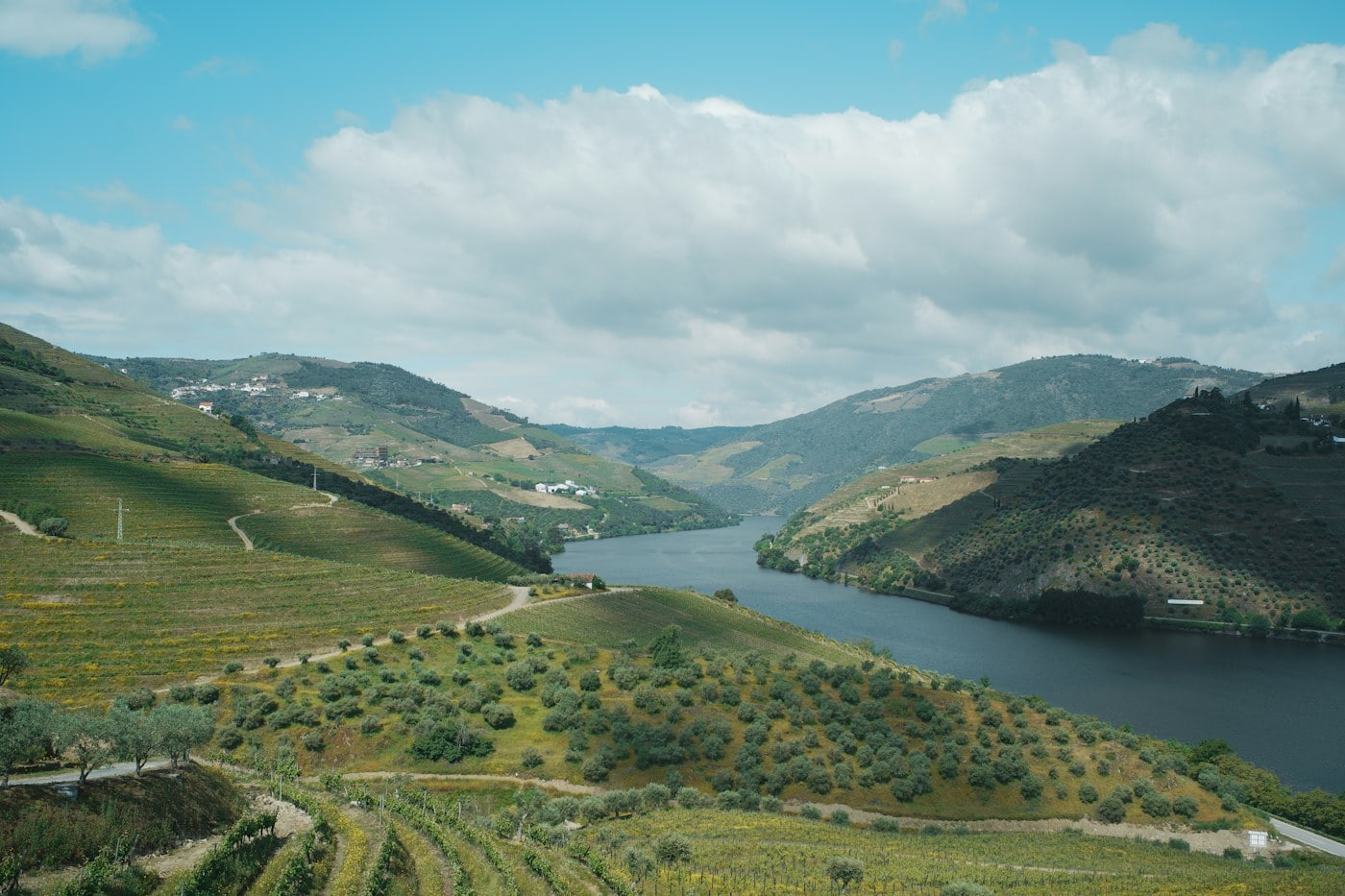
If your chosen base is in the Douro, the river and vineyard terraces create a dramatic setting with practical constraints. Roads can be winding, slopes substantial and distances slower than they look. Choose a viewpoint or riverside town that fits a manageable route. There is no need to build the entire visit around tasting experiences. Architecture, agricultural patterns and the contrast between valley floor and higher villages provide plenty to explore at an unhurried pace.
A Douro outing should distinguish between a valley-floor town and a higher viewpoint. Reaching both can involve winding roads and more time than the distance suggests. Choose a sequence that avoids repeatedly climbing and descending the same slope. If you want to walk, use a clearly described public route rather than entering a vineyard track because it looks scenic. Working terraces are not automatically visitor trails. A rail or boat component, where suitable to the chosen base, has its own current schedule and access points. Compare the entire journey before committing. The strongest day may be a town, one viewpoint and a meal, with no need to add another valley.
Give Minho a different rhythm
In the Minho, green fields, small settlements and towns such as Ponte de Lima create another version of northern Portugal. A river walk and market-town visit can complement a village base without requiring a grand circuit. Choose outings that relate to the landscape around your accommodation. The pleasure lies in gradual familiarity, including recognizing the same hills from a different road. Resist adding a distant attraction simply because it is prominent in a national itinerary.
Ponte de Lima offers a river-centered town visit that can fit a Minho stay, while other bases may make a different local town more practical. Use the river and central streets as the outing’s structure rather than trying to cover every monument. A market, when operating, changes the atmosphere and may be worth planning around, but verify the current schedule. The surrounding countryside should remain part of the visit: stop only where parking is appropriate and avoid using a village entrance as an improvised viewpoint. If a walk is the priority, choose a documented route and let the town provide lunch afterward. This keeps the day connected to one area.
Let food follow the place
Local meals can be generous, and regional specialties vary between inland areas, river valleys and the coast. Read the actual menu and ask what makes sense for the size of your table. A simple lunch can be more revealing than a long search for a famous dish served far from where you are staying. If cooking for yourself, buy ingredients you can use during the visit rather than collecting an ambitious pantry that will be abandoned at departure.
Northern Portuguese menus can include substantial portions and dishes designed for sharing, so ask before ordering several mains for a small group. Inland meat preparations and coastal seafood traditions should not be treated as the same local offer. Choose what the kitchen is equipped to do well where you are. For self-catering, a few ingredients that combine into two meals are more useful than a refrigerator full of unrelated purchases. Local bread, vegetables and a simple protein can make a satisfying dinner after a walk. If you want a special restaurant meal, reserve it on a day without a demanding return drive, and keep another meal deliberately light.
Keep mountain outings realistic
Peneda-Gerês and other upland areas attract walkers, but a scenic village stay does not automatically provide access to every trail. Routes can involve exposed terrain, steep sections and changing weather. Choose an officially described walk that matches your experience and check current conditions locally. Do not improvise a long mountain route from a social-media photograph. A shorter marked path can offer a strong sense of landscape while leaving the rest of the day comfortable.
Peneda-Gerês is not one uniform walking landscape. The route, access point and current conditions determine the outing, not simply the national park name. Ask the relevant visitor information service about a walk suited to your experience and verify whether any restrictions apply. Steep paths, exposed ground and changes in weather can turn a short distance into a substantial effort. Do not rely on a village host’s broad description of an easy walk if you need a precise accessibility assessment. Carry appropriate supplies and turn back while the return remains comfortable. A clearly marked shorter route can reveal the upland setting without creating an unnecessarily demanding day.
A week with only a few anchors
A week in one northern Portuguese village can have just three major anchors: a town outing, a chosen walk and a landscape excursion. The other days can remain local or respond to weather and interest. This does not mean staying indoors every other day. It means allowing small walks, shopping and meals to become experiences without assigning each a place in a large sightseeing circuit.
If you will have a car, use it to make the base practical rather than to maximize daily distance. Combine necessary groceries with an outing and avoid repeated drives for forgotten supplies. If traveling without one, choose a village with transport connections and confirm how those services actually operate. A beautiful remote property is rarely the best place to discover that every return journey depends on a taxi booked well in advance. Clear transport arrangements create the freedom to slow down; isolation alone does not guarantee it. Ask hosts for realistic local suggestions rather than a list designed to cover the entire region.
Give the base a full day
The best argument for staying in a village is the day when you do not leave it for a major excursion. Shop, cook, read and walk the familiar route again. Notice how light changes on the same buildings and how the square is used at different hours. This is not an empty day between attractions. It is the part of the trip that makes the accommodation a place of experience rather than merely somewhere to sleep.
A day at the base can include an ordinary grocery trip, a local meal and the same small walk in different light. That repetition is particularly valuable if the previous outings involved driving. Use the accommodation’s outdoor space only as agreed, and keep residential noise considerate. If a host recommends a workshop or farm visit, ask whether it is a public business and whether an appointment is expected. A personal recommendation does not necessarily mean you can arrive unannounced. Leave the final evening close to the village and settle the onward route in advance. The benefit of staying put is lost if departure becomes an ambitious last circuit through several distant towns.